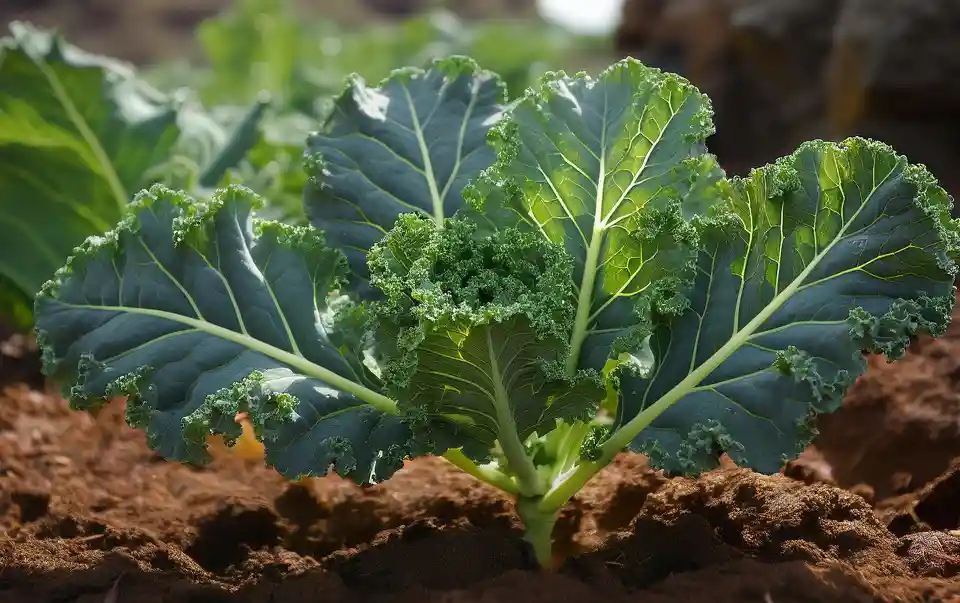
Can Chickens Eat Kale and Collard Greens?
Yes. Chickens can eat kale and collard greens, including the leaves and tender stems. They can be offered raw or plain cooked as supplemental foods alongside a balanced complete feed. Kale and collards can also be useful crops for backyard flocks because established plants can provide repeated harvests of fresh greens through much of the growing season.
Jump to feeding kale and collard greens → | Jump to growing kale and collard greens →
🥬 Can Chickens Eat Kale and Collard Greens?
Yes. Chickens can eat both kale and collard greens. Fresh leaves, tender stems, and plain cooked greens are all suitable as supplemental foods. Kale and collards can provide fresh forage and pecking enrichment, but they should complement rather than replace an age-appropriate complete poultry ration.
Can Chickens Eat Collard Greens?
Yes. Chickens can eat clean raw collard greens, tender collard stems, and plain cooked collards. Avoid greens prepared with heavy salt, grease, sauces, or seasonings, and do not feed moldy, slimy, or spoiled leaves.
Can Chickens Eat Kale?
Yes. Chickens can eat clean raw kale leaves, tender kale stems, and plain cooked kale as supplemental foods. Avoid spoiled or moldy greens and heavily salted, greasy, or seasoned preparations.
| Form | Safe for Chickens? | Best Approach |
|---|---|---|
| Fresh kale leaves | ✅ Yes | Offer whole, torn, chopped, or hung for pecking. |
| Fresh collard leaves | ✅ Yes | Offer clean raw leaves as supplemental greens. |
| Tender kale stems | ✅ Yes | Allow chickens to peck them or chop thicker stems. |
| Tender collard stems | ✅ Yes | Split or chop very thick mature stems if desired. |
| Plain cooked kale | ✅ Yes | Cool before feeding and avoid added salt, grease, sauces, onions, or garlic. |
| Plain cooked collards | ✅ Yes | Use the same approach as plain cooked kale. |
| Canned or prepared collards | ⚠ Check ingredients | Many prepared products contain substantial sodium, grease, meat seasonings, or other added ingredients. |
| Frost-exposed leaves | ✅ Usually | Sound leaves are usable; discard slimy, rotten, or moldy material. |
| Diseased or heavily spotted leaves | ⚠ Avoid | Do not use questionable plant material simply to prevent waste. |
| Moldy or rotting greens | ❌ No | Discard them. |
Kale and collards contain substantial water and do not provide the concentrated energy, amino-acid balance, calcium, phosphorus, vitamins, minerals, and other nutrients supplied by a properly formulated complete poultry ration.
📊 Kale & Collards at a Glance
Excellent Cool-Season Feed-Garden Crops🥬 Kale vs. Collard Greens for Chickens
Kale and collard greens are closely related leafy Brassica crops. Most common garden kale and collards belong to Brassica oleracea, the same species that also includes cabbage, broccoli, cauliflower, and Brussels sprouts.
For backyard chickens, the practical differences between kale and collards matter less nutritionally than they do in the garden. Both can provide fresh supplemental greens, both can be harvested repeatedly, and both can be offered in essentially the same ways.
| Feature | Kale | Collard Greens |
|---|---|---|
| Chicken use | Supplemental leafy forage and enrichment | Supplemental leafy forage and enrichment |
| Leaves | Often curled, ruffled, lobed, or textured depending on variety | Usually broad, smooth, and relatively thick |
| Tender stems | Edible | Edible |
| Repeated harvest | Excellent | Excellent |
| Cool-weather production | Excellent | Excellent |
| Cold tolerance | Excellent for many varieties | Excellent |
| Warm-climate usefulness | Good with suitable varieties and planting dates | Often especially well suited to Southern gardens |
| Small-space growing | Excellent | Excellent |
| Container growing | Good | Good with adequate container size |
| Best reason to choose it | Variety selection, cold tolerance, compact options, and repeated harvest | Large productive leaves, repeated harvest, and strong performance in many Southern gardens |
If you have room, growing both is a practical choice. Their growing requirements overlap enough that they can share the same cool-season garden while allowing you to compare production, pest pressure, heat tolerance, cold tolerance, and flock preference under your own conditions.
🐔 How to Safely Feed Kale and Collard Greens to Chickens
Kale and collards require very little preparation before feeding. Healthy garden leaves can be harvested and carried directly to the flock, while store-bought greens should be clean and free from spoilage before they are offered.
- Offer clean fresh leaves raw, or serve cooked greens plain and cooled.
- Tender kale and collard stems are also safe for chickens to peck and eat.
- Avoid heavily salted, greasy, seasoned, moldy, slimy, or spoiled greens.
- Keep kale and collards supplemental so they do not replace the flock's complete poultry feed.
There is no single feeding method that works best for every flock. Chickens may show very different preferences for whole leaves, chopped greens, hanging leaves, and material they harvest themselves.
Fresh Whole Leaves
Whole leaves are one of the simplest options. Toss a few clean leaves into the run or place them where the flock can peck at them.
Large kale and collard leaves are especially useful for this because the birds must tear pieces from the leaf rather than swallowing the entire portion at once.
Chopped Greens
Large leaves and thick stems may also be chopped into smaller pieces.
Chopping can be useful when:
- The leaves have become large or tough.
- You are mixing small amounts of several garden greens.
- The flock leaves thick stems behind.
- You want to distribute a small harvest among several birds.
Cut-and-Carry Feeding
For most backyard feed gardens, cut-and-carry harvesting is the easiest way to protect the crop.
- Harvest several healthy outer leaves.
- Leave the central growing point intact.
- Carry the harvested leaves to the chicken area.
- Allow the plants to produce replacement foliage.
- Harvest again after sufficient regrowth.
This method allows the gardener to control how much foliage the flock receives while protecting roots, stems, and new growth from scratching and overgrazing.
Some flocks enthusiastically tear apart fresh greens while others initially show little interest. Flock preference can change with season, age, available forage, and familiarity with the food.
🪝 Hanging Kale and Collard Greens for Chickens
Large kale and collard leaves can also be suspended where the flock can peck at them. This turns a simple garden supplement into a form of environmental enrichment.
Hanging greens can be especially useful when chickens are temporarily confined to a run and have fewer opportunities to explore living vegetation.
Why Hang the Leaves?
- Encourages pecking and investigation.
- Keeps leaves away from mud and manure.
- Slows consumption compared with a pile of chopped greens.
- May reduce trampling and waste.
- Provides activity during periods of confinement.
- Allows several birds to work at a large leaf.
Avoid loose string, wire loops, sharp clips, hooks, or anything else that could create an entanglement or injury hazard. Position the greens where birds can comfortably peck them without having to jump into unsafe objects.
🍽️ Can Chickens Eat Raw or Cooked Kale and Collard Greens?
Yes. Chickens can eat both raw greens and plain cooked kale or collards. The important distinction is usually not whether the leaves have been cooked, but what was added during preparation.
| Preparation | Suitable? | What to Know |
|---|---|---|
| Raw garden leaves | ✅ Yes | An excellent way to use freshly harvested healthy foliage. |
| Raw store-bought leaves | ✅ Yes | Wash and inspect before feeding. |
| Plain steamed greens | ✅ Yes | Cool before offering. |
| Plain boiled greens | ✅ Yes | Allow them to cool and drain excess cooking water. |
| Plain leftover cooked greens | ✅ Usually | Use only when they have been stored safely and contain no unsuitable added ingredients. |
| Greens cooked with substantial salt | ❌ Avoid | Prepared human foods can contain far more sodium than a chicken needs from a treat. |
| Greens cooked in bacon grease or heavy fat | ❌ Avoid | The added fat and seasoning make them a poor choice for routine supplemental feeding. |
| Heavily seasoned greens | ❌ Avoid | The added ingredients, rather than the kale or collards themselves, may make the food unsuitable. |
| Moldy, slimy, or spoiled cooked greens | ❌ No | Discard spoiled food rather than feeding it to the flock. |
Can Chickens Eat Cooked Collard Greens?
Yes, if they are plain. Chickens can eat cooked collard greens that have been cooled and prepared without heavy salt, grease, sauces, or seasonings. Fresh raw collards or plain home-cooked greens are simpler choices than heavily seasoned leftovers.
What About Canned Collard Greens?
Canned collard greens deserve special attention because commercial products vary considerably.
The collards themselves are not the problem. The concern is that canned or prepared greens may contain substantial sodium, seasonings, meat flavorings, fats, sauces, or other added ingredients.
Check the ingredient list and nutrition label rather than assuming every canned product is equivalent to plain collard greens. When fresh greens or plain home-cooked greens are available, they are the simpler option.
🌿 Can Chickens Eat Kale Stems and Collard Green Stems?
Yes. Chickens can peck and eat tender kale and collard stems as well as the leaves.
The main limitation is texture. Young stems can be tender, while the central ribs and stalks of mature leaves may become thick and fibrous. Chickens may strip away the softer leaf tissue and leave the toughest portions behind.
What to Do With Thick Stems
If your flock routinely leaves mature stems behind, you can:
- Chop them into shorter pieces.
- Split especially thick stems lengthwise.
- Offer them with more tender leaves.
- Remove uneaten pieces before they become wet or spoiled.
- Compost the toughest material instead of trying to make the flock eat it.
One advantage of growing greens for both the household and the flock is that the best leaves can go to the kitchen, healthy outer leaves can go to the chickens, and tough or damaged plant material can go to the compost pile.
🥚 Are Kale and Collard Greens Good for Laying Hens?
Kale and collards can be useful supplemental greens for laying hens because they contribute moisture, fiber, carotenoids, vitamins, minerals, and plant compounds while also encouraging natural pecking behavior.
That does not make kale or collards a substitute for layer feed.
A laying hen has demanding nutritional requirements, especially for energy, amino acids, calcium, phosphorus, vitamins, and trace minerals. A complete layer ration is formulated to supply those nutrients in appropriate proportions.
Fresh greens are much less nutrient-dense on a fresh-weight basis because much of their weight is water.
Kale and collards may contribute dietary calcium, but they do not provide the complete nutritional balance required for sustained laying performance and eggshell formation.
🐥 Can Baby Chicks Eat Kale and Collard Greens?
A complete age-appropriate chick starter should provide the foundation of a young chick's diet. Starter feed is designed to provide the concentrated protein, amino acids, energy, vitamins, and minerals required during rapid early growth.
Very young chicks do not need kale or collards in order to develop properly, and large quantities of supplemental food can displace the starter feed they actually require.
Once chicks are established, older, and beginning to receive appropriate supplemental foods, small tender pieces of clean greens may be introduced conservatively.
The younger the bird, the more important it is to avoid diluting a carefully formulated starter ration with large amounts of garden produce or treats.
🥗 Kale and Collard Greens Nutrition for Chickens
Fresh kale and collard greens contain water, fiber, carotenoids, vitamins, minerals, and numerous naturally occurring plant compounds. Their exact composition varies with variety, maturity, growing conditions, storage, preparation, and whether the values are expressed on a fresh-weight or dry-matter basis.
For backyard flock management, the most important point is that leafy greens are nutrient-rich foods but not nutritionally complete poultry feeds.
| Nutritional Feature | Potential Contribution | Practical Limitation |
|---|---|---|
| Water | Fresh leaves provide substantial moisture. | High water content means a large pile of leaves provides much less dry matter than the same weight of complete feed. |
| Fiber | Provides plant material and bulk. | Older leaves and stems become increasingly fibrous. |
| Carotenoids | Leafy green plant pigments contribute to the variety of compounds consumed by foraging birds. | Carotenoid content varies with cultivar, maturity, storage, and growing conditions. |
| Vitamins | Fresh leafy greens contain several naturally occurring vitamins. | Their presence does not make the greens a complete vitamin source for poultry. |
| Minerals | Kale and collards contain several dietary minerals. | Mineral concentration and availability do not reproduce the carefully balanced mineral profile of complete poultry feed. |
| Protein | Leaf tissue contains protein. | Fresh greens are too moisture-rich and nutritionally unbalanced to serve as the flock's primary protein source. |
| Energy | Provides some dietary energy. | Fresh leafy greens are not concentrated energy feeds like grains or formulated poultry rations. |
Comparing a moisture-rich kale leaf directly with dry poultry feed can make nutrient values difficult to interpret. Feed formulation commonly uses dry-matter and nutrient-balance concepts that are very different from simply comparing foods by fresh weight.
⚠️ Brassica Feeding Limitations
Kale and collards belong to the Brassica group and naturally contain glucosinolates and related plant compounds. These compounds are one reason it is important to distinguish between ordinary supplemental feeding and using large amounts of Brassica material as a major ingredient in a formulated poultry diet.
A few fresh leaves offered to a backyard flock are not the same thing as feeding concentrated Brassica seed meals or formulating a ration containing substantial amounts of Brassica-derived ingredients.
Practical Backyard Guidelines
- Do not allow kale or collards to replace complete poultry feed.
- Avoid making one leafy crop the dominant food available to the flock.
- Continue providing unrestricted access to the flock's normal complete ration.
- Introduce unfamiliar supplemental foods gradually.
- Watch whether heavy access to greens reduces normal feed consumption.
- Rotate homegrown greens with other appropriate supplemental foods rather than relying on a single crop.
- Discard moldy, slimy, fermented, or rotting foliage.
- Do not feed plants contaminated by unsafe pesticide applications or other chemicals.
Flock size, bird age, body size, season, other forage, complete-feed consumption, and the size of individual leaves all vary. A more useful backyard standard is to keep kale and collards supplemental and make sure the birds continue consuming their nutritionally complete ration normally.
📅 Can Chickens Eat Kale or Collard Greens Every Day?
Small amounts of fresh greens may be available regularly when kale and collards are producing well, but daily access does not mean the flock should receive unlimited quantities.
The better question is whether supplemental greens are beginning to displace complete feed.
| What You Observe | What It May Mean |
|---|---|
| Birds eat some greens and continue consuming their normal ration | The greens are functioning as a supplement. |
| A few leaves disappear quickly but normal feed consumption remains steady | The flock may simply enjoy the additional forage and enrichment. |
| Large amounts of greens remain uneaten | Reduce the amount offered and prevent waste or spoilage. |
| Birds fill up on garden produce and noticeably reduce complete-feed intake | Reduce supplemental feeding. |
| Wet leaves accumulate in the run | Remove excess material before it becomes a sanitation problem. |
Homegrown greens work best when they add fresh forage, seasonal variety, and enrichment without forcing the keeper to rebalance the flock's entire diet.
🌱 Choosing Kale and Collard Varieties
You do not need a special "chicken" variety of kale or collard greens. The same edible garden cultivars grown for people can also produce supplemental greens for a backyard flock.
For a feed garden, however, the best variety is not necessarily the one with the prettiest leaves. Productivity, cold tolerance, heat tolerance, plant size, disease resistance, and the ability to recover after repeated harvesting may matter more.
| Type | Examples | Why Consider It? |
|---|---|---|
| Curly kale | Vates and similar cultivars | Cold tolerant, productive, widely available, and well suited to repeated leaf harvest. |
| Siberian-type kale | Dwarf Siberian and related types | Tender foliage and excellent usefulness during cool weather. |
| Tall kale | Larger upright cultivars | Can produce substantial leaf biomass while allowing outer leaves to be harvested individually. |
| Traditional collards | Georgia Southern and similar cultivars | Large leaves, strong Southern garden tradition, and good cool-season productivity. |
| Improved collards | Blue Max, Hevi-Crop and similar cultivars | May offer improved uniformity, vigor, productivity, or disease characteristics depending on the cultivar. |
If this is your first time growing greens for chickens, start with one locally recommended kale and one locally recommended collard. After a season, you will know far more about which one handles your climate, pests, soil, and flock preferences than a seed catalog can tell you.
📅 When to Plant Kale and Collard Greens
Kale and collards are primarily cool-season crops. They generally perform best when much of their growth occurs during mild weather rather than during the hottest part of summer.
That makes planting time highly dependent on climate. Gardeners in cold regions may concentrate production in spring and fall, while growers in much of the South can use fall plantings for extended cool-season and sometimes winter harvests.
| Planting Window | Advantages | Challenges |
|---|---|---|
| Early spring | Cool growing weather and early fresh greens | Young plants may experience hard freezes, while mature plants eventually face rising summer temperatures. |
| Late summer | Establishes plants for fall production | Heat and dry soil can make germination and transplant establishment difficult. |
| Fall | Excellent growing temperatures, frost tolerance, and potentially long harvest periods | Planting too late may not allow enough growth before cold weather slows development. |
| Winter in mild climates | Potential continued production when many other feed-garden crops are dormant | Growth slows substantially during short days and severe cold can still damage plants. |
Starting kale and collards while summer is winding down allows established plants to move into the cooler temperatures they prefer. In sufficiently mild climates, healthy plants may continue supplying usable foliage well into the cool season.
The ideal planting date in Minnesota can be very different from Georgia, Texas, or coastal South Carolina. Work backward from your local frost pattern and the maturity range of the variety you are growing.
☀️ Growing Kale and Collards in the South
Kale and especially collard greens are excellent candidates for Southern feed gardens, but timing matters.
The challenge is not usually whether these crops can handle cool weather. The harder part is establishing a fall crop while late-summer temperatures may still be hot.
University of Georgia Extension recommends beginning many fall cool-season crops during late summer and moving transplants into the garden as temperatures moderate. Exact timing varies across the state and throughout the Southeast.
A Practical Southern Strategy
- Choose varieties recommended for your region.
- Prepare the growing area before late-summer planting begins.
- Start fall seedlings where they can receive some protection from extreme afternoon heat.
- Keep seedbeds and young transplants consistently moist during establishment.
- Move transplants into their permanent location as seasonal temperatures begin moderating.
- Use mulch to help conserve soil moisture and moderate soil temperature.
- Continue harvesting healthy outer leaves as the plants mature through fall.
For chicken keepers in much of the Southeast, collards can provide a productive bridge between the end of the warm-season garden and the colder months when many other homegrown supplemental crops are no longer producing.
🌱 Seeds or Transplants?
Kale and collards can be grown successfully either by direct seeding or by transplanting young plants. Neither method is universally better.
| Method | Advantages | Disadvantages |
|---|---|---|
| Direct seeding | Inexpensive, simple, and avoids transplant shock | Requires dependable soil moisture and exposes tiny seedlings directly to insects, weeds, heat, and weather. |
| Homegrown transplants | Provides greater control during germination and allows plants to establish before entering the garden | Requires seed-starting space and hardening before transplanting. |
| Purchased transplants | Fastest and easiest way to establish a small planting | Costs more per plant and limits variety selection. |
For a small backyard feed garden, transplants can be particularly useful because losing a few direct-seeded plants to insects or hot weather may represent a large percentage of the entire planting.
🌱 How to Plant Kale and Collard Greens
Kale and collard seed is small and should be planted shallowly. Extension recommendations commonly place seed approximately ¼ to ½ inch deep.
Direct-Seeding Steps
- Prepare the soil. Loosen the planting area, remove established weeds, and work in appropriate soil amendments based on your soil conditions.
- Create a shallow planting row. Avoid deep furrows that bury the tiny seed excessively.
- Plant approximately ¼ to ½ inch deep. Follow the seed packet and locally appropriate Extension guidance for your particular variety and conditions.
- Water gently. Use enough water to moisten the seed zone without washing the tiny seeds out of position.
- Keep the surface consistently moist during germination. Tiny seedlings have limited root systems and can dry quickly.
- Thin after emergence. Remove or transplant excess seedlings so remaining plants have enough room to develop.
Kale and collard seeds contain limited stored energy. Excessive planting depth can reduce or delay emergence.
📏 How Far Apart Should Kale and Collards Be Planted?
There is no single correct spacing because spacing depends on whether you want baby leaves, mature plants, maximum leaf size, or high production from a limited area.
| Growing Goal | General Approach | Why |
|---|---|---|
| Baby greens | Closer spacing | Plants are harvested while foliage is still small and tender. |
| Repeated outer-leaf harvest | Moderate spacing | Provides enough room for each plant to continually replace harvested foliage. |
| Large mature collards | Wider spacing | Allows broad leaves and larger plants to develop without severe crowding. |
| Container production | One or a few plants per suitably sized container | Reduces competition for water, nutrients, and root space. |
As a useful reference point, University of Minnesota Extension recommends thinning direct-seeded plants to approximately 8–12 inches apart, while closer spacing may be used for baby-leaf production. Commercial and regional recommendations can be wider depending on cultivar and production system.
A moderately spaced bed that continually produces harvestable outer leaves may be more useful than a few enormous plants if your objective is frequent cut-and-carry feeding.
🌎 Best Soil for Kale and Collard Greens
Kale and collards perform best in fertile, well-drained soil with good organic matter and dependable moisture. University of Minnesota Extension recommends a soil pH of approximately 6.0 to 7.5.
A soil test is preferable to guessing how much lime, phosphorus, potassium, or fertilizer the garden needs.
| Soil Factor | Preferred Condition |
|---|---|
| Drainage | Well drained |
| Organic matter | Moderate to high |
| Soil pH | Approximately 6.0–7.5 |
| Moisture | Consistent without prolonged waterlogging |
| Fertility | Adequate for steady leafy growth, preferably guided by a soil test |
The goal is steady, healthy leaf production—not simply applying as much nitrogen as possible. Base amendments on soil conditions and local recommendations, especially when these greens are being grown as food for both people and animals.
💧 Watering Kale and Collard Greens
Consistent moisture encourages steady growth and tender leaves. Water stress, particularly when combined with high temperatures, can reduce plant quality and contribute to stronger or more bitter flavors.
University of Minnesota Extension uses approximately one inch of rainfall or irrigation per week as a general reference, while noting that sandy soils may require more frequent watering. Actual irrigation needs depend on rainfall, soil type, temperature, wind, plant size, mulch, and container conditions.
Better Watering Practices
- Water deeply enough to moisten the active root zone.
- Check soil moisture rather than watering solely by the calendar.
- Water young seedlings carefully because their shallow roots dry quickly.
- Use mulch to reduce evaporation and soil-temperature swings.
- Do not allow containers to repeatedly dry completely.
- Maintain good drainage rather than leaving roots in saturated soil.
🪴 Growing Kale and Collards in Containers and Raised Beds
You do not need a large garden to produce useful amounts of kale or collard greens for a small flock.
Both crops can be grown in traditional garden rows, raised beds, or sufficiently large containers. That makes them particularly useful for chicken keepers who have limited planting space.
| Growing Method | Advantages | Watch For |
|---|---|---|
| In-ground bed | Large root zone and slower moisture fluctuations | Soil drainage, weeds, and crop rotation |
| Raised bed | Easy soil improvement, good drainage, and convenient harvesting | May dry faster than native soil |
| Large container | Excellent for patios, small yards, and movable plantings | Requires dependable watering and sufficient root volume |
| Protected bed near the coop | Convenient cut-and-carry harvesting | Must prevent chickens from reaching through fencing and stripping young plants |
You do not need to produce hundreds of pounds of grain to get useful flock value. A relatively small protected bed can repeatedly produce fresh leaves during the seasons when these crops are actively growing.
🛡️ Protecting Kale and Collards From Your Chickens
Ironically, one of the greatest threats to a successful chicken feed garden may be the chickens themselves.
An established kale or collard plant can tolerate repeated leaf harvesting by a gardener. A flock of chickens, however, may strip foliage, scratch around the roots, damage stems, and destroy seedlings before the plants have a chance to establish.
Better Protection Options
- Grow plants outside the permanent chicken run.
- Fence the crop until plants are well established.
- Use cut-and-carry harvesting.
- Allow only short periods of controlled flock access.
- Protect young transplants with temporary fencing or cages.
- Use low tunnels or insect netting when pest protection is also needed.
A determined flock can remove an impressive amount of foliage in a short period. If continued production matters, control access rather than expecting the plants to survive continuous grazing.
🐛 Common Kale and Collard Pests
Kale and collards are productive crops, but they are also members of the Brassica family—and several insects are just as interested in those leaves as your chickens are.
Caterpillars are among the most important insect pests of Brassica crops. Regular inspection is especially valuable because a small number of pests can become a much larger problem if they are allowed to reproduce unnoticed.
| Pest | What You May Notice | Backyard Response |
|---|---|---|
| Imported cabbageworm | Irregular holes in leaves and green caterpillars on foliage | Inspect leaves regularly and hand-pick caterpillars in small plantings. |
| Cabbage looper | Chewed leaves and green caterpillars that move with a looping motion | Scout frequently and remove caterpillars before damage becomes severe. |
| Diamondback moth caterpillar | Small caterpillars and numerous small feeding holes | Early detection is important because populations can increase quickly. |
| Aphids | Clusters of small insects, often on undersides of leaves or tender growth | Inspect closely and manage before colonies become established. |
| Harlequin bugs | Distinctive patterned insects and damaged or discolored feeding areas | Scout plants and remove insects or egg masses when practical. |
| Flea beetles | Numerous tiny holes, especially troublesome on young seedlings | Protect young plants and monitor closely during establishment. |
If you are growing only a few kale and collard plants for your flock, checking the undersides of leaves every few days can catch caterpillars and egg masses before they become a serious infestation.
Can Row Covers Help?
Yes. Fine insect netting or lightweight row covers can be especially useful for a small backyard planting because they create a physical barrier between the crop and egg-laying moths and butterflies.
Unlike fruiting vegetables that depend on insect pollination, kale and collards are grown primarily for their leaves. That makes covering the plants comparatively simple during the leaf-production stage.
Covering plants after caterpillars or eggs are already present can simply trap the problem underneath the cover. Inspect plants before covering them and keep the edges secured.
🦠 Common Kale and Collard Diseases
Not every damaged leaf is caused by an insect. Kale and collards can also develop bacterial, fungal, and environmental problems.
Common Brassica disease concerns include black rot, downy mildew, and several leaf-spot diseases. Warm temperatures, high humidity, prolonged leaf wetness, infected plant debris, poor airflow, and repeated Brassica production in the same location can contribute to disease problems.
| Problem | Possible Signs | Helpful Prevention |
|---|---|---|
| Black rot | Yellowing or damaged areas that may progress inward from leaf margins | Use healthy planting material, practice sanitation, rotate crops, and avoid spreading contaminated plant material. |
| Downy mildew | Yellowing or brown areas with growth that may appear on leaf undersides | Improve airflow, reduce prolonged leaf wetness, and avoid overcrowding. |
| Alternaria and other leaf spots | Dark or discolored spots on foliage | Remove infected debris, rotate crops, and avoid unnecessary leaf wetness. |
| Damping-off | Seedlings rot or collapse near the soil line | Use clean seed-starting media, clean containers, and good drainage. |
Rotate Brassica Crops
Crop rotation is especially important when disease has been a recurring problem.
Remember that kale, collards, cabbage, broccoli, cauliflower, Brussels sprouts, and several other familiar garden crops are closely related. Moving from kale one year to cabbage the next may change the crop name, but it does not provide the same disease break as rotating to an unrelated plant family.
Old Brassica leaves, stems, volunteer plants, and weeds can help carry some pests and diseases from one planting to the next. Removing heavily diseased material and cleaning the bed at the end of the season can reduce future pressure.
☀️ Heat Stress and Bolting
Kale and collards are cool-season vegetables. As temperatures rise, growth can slow and leaf quality may decline.
Hot, dry conditions can produce tougher, stronger-flavored leaves. Eventually, seasonal conditions and plant maturity may cause the plant to shift away from leaf production and toward flowering and seed production.
That transition is called bolting.
| What You See | What May Be Happening |
|---|---|
| Leaves becoming tougher | Heat, plant maturity, or water stress may be reducing leaf quality. |
| Growth slowing during hot weather | The crop is moving outside its preferred cool-season conditions. |
| Central stalk rapidly elongating | The plant may be beginning reproductive growth. |
| Flower buds developing | Bolting is underway. |
| Flowers opening | The plant has transitioned substantially from leaf production toward reproduction. |
Kale and collards are naturally biennial plants even though we usually grow them as annual vegetables. Flowering and seed production are normal parts of their life cycle. For a chicken feed garden, it simply means that the plant's most productive leaf-harvest period is coming to an end.
✂️ How to Harvest Kale and Collard Greens
One of the greatest advantages of kale and collards is that you do not have to harvest the entire plant at once.
Instead, mature outer leaves can be removed while the younger central growth remains intact. This allows the same plant to continue producing additional leaves.
Step-by-Step Harvesting
- Choose healthy outer leaves. Start with mature leaves near the lower portion of the plant.
- Remove only a portion of the foliage. Harvest a few useful leaves rather than stripping the entire plant.
- Leave the center intact. Protect the young central leaves and active growing point.
- Inspect the harvest. Check leaves for insects, disease, contamination, and spoilage before carrying them to the flock or kitchen.
- Allow the plant to recover. Give remaining foliage time to support continued growth.
- Return for another harvest. As new leaves mature, the process can be repeated.
Harvesting mature outer leaves while protecting the central growing point is the key to turning one kale or collard plant into a repeated source of fresh greens rather than a one-time harvest.
🔄 Will Kale and Collard Greens Grow Back After Harvesting?
Yes. Healthy kale and collard plants can continue producing leaves after individual outer leaves are harvested.
That repeated-harvest ability is one of the strongest reasons these crops work so well in a backyard chicken feed garden.
| Harvest Method | Regrowth Potential |
|---|---|
| A few mature outer leaves removed | ★★★★★ Excellent |
| Moderate harvest with center protected | ★★★★☆ Very good under healthy growing conditions |
| Most foliage stripped away | ★★☆☆☆ Recovery may be slow or unsuccessful |
| Central growing point damaged | ★☆☆☆☆ Continued production may be severely reduced |
| Whole plant cut or pulled | ☆☆☆☆☆ Normal repeated leaf harvest ends |
How Many Times Can You Harvest?
There is no useful universal number.
A healthy plant may provide repeated harvests over an extended period, but the number of harvests depends on temperature, day length, fertility, moisture, pest damage, plant size, cultivar, and how aggressively leaves are removed.
For chicken keepers, it is better to think in terms of continuous moderate harvest rather than trying to achieve a particular number of cuttings.
If space allows, maintaining a small group of plants lets you rotate harvesting among them. One group can recover while another provides the next batch of greens.
❄️ Can Kale and Collards Survive Frost?
Yes. Kale and collards tolerate cool weather and frost considerably better than warm-season garden vegetables. That cold tolerance is a major reason they are valuable in fall and winter feed gardens.
Mature collards can withstand frost and light-to-medium freezes, while kale is also widely grown through cold weather. Exact survival depends on cultivar, plant maturity, temperature, duration of the freeze, wind, moisture, and whether the plants have gradually acclimated to colder conditions.
Does Frost Make Kale and Collards Better?
Gardeners have long observed improved eating quality in many cool-season greens after frost. Clemson Extension specifically notes improved flavor after frost for kale and collards.
For chickens, the more important practical advantage is that these plants can remain available after many warm-season supplemental crops have stopped producing.
A mature plant that handles an ordinary frost may still be damaged by a severe or prolonged freeze. Young seedlings, recent transplants, container-grown plants, and exposed plants may also be more vulnerable.
🥶 Can Chickens Eat Frost-Damaged Kale and Collards?
Ordinary frost exposure does not automatically make a kale or collard leaf unsuitable for chickens.
The important distinction is between a sound cold-exposed leaf and plant material that has deteriorated after severe freeze damage.
| Leaf Condition | Recommendation |
|---|---|
| Healthy leaf after a light frost | ✅ Generally usable |
| Wilted but otherwise sound cold-exposed leaf | ✅ Inspect before feeding |
| Severely freeze-damaged tissue beginning to decompose | ❌ Discard |
| Slimy leaf | ❌ Discard |
| Moldy leaf | ❌ Discard |
| Leaf with foul or fermented odor | ❌ Discard |
Cold weather itself is part of normal kale and collard production. Spoilage, mold, rot, or questionable contamination are the reasons to discard leaves.
🌨️ Growing Kale and Collards Through Winter
In suitable climates, kale and collards can extend the homegrown feed season well beyond the first frost.
Growth slows as days shorten and temperatures fall, so winter production should not be confused with summer-like growth. The objective is often to preserve an established crop and harvest gradually rather than expect rapid replacement of every leaf removed.
Ways to Extend the Season
- Plant early enough for substantial growth before winter.
- Choose cold-tolerant varieties.
- Mulch around plants to moderate soil conditions.
- Use floating row cover when additional frost protection is needed.
- Use low tunnels for greater protection.
- Grow a small planting in a cold frame.
- Protect containers from extreme root-zone freezing.
- Harvest conservatively during periods of very slow growth.
Sunflowers, cowpeas, amaranth, pumpkins, and many other warm-season feed crops have finished producing by winter. Kale and collards can help extend the season in the opposite direction, providing fresh supplemental plant material when much of the garden is dormant.
🏕️ Row Covers, Low Tunnels and Cold Frames
Simple season-extension structures can make kale and collards even more useful to backyard chicken keepers.
Floating row covers and low tunnels trap some heat around the plants and reduce exposure to cold wind. Depending on the material and design, they can also provide insect protection earlier in the season.
| Method | Best Use | Complexity |
|---|---|---|
| Floating row cover | Light frost and insect protection | Low |
| Low hoop tunnel | Longer cool-season production and stronger weather protection | Low to moderate |
| Cold frame | Small protected winter planting | Moderate |
| Unheated greenhouse | Larger protected cool-season production | High |
For a small chicken feed garden, inexpensive hoops and garden fabric may provide enough protection to extend harvesting significantly beyond what completely exposed plants would provide.
🐔 A Better Harvest Strategy for a Backyard Flock
If your goal is chicken supplementation rather than a single household harvest, manage the planting differently. The objective is to keep plants producing usable foliage for as long as practical.
- Grow several plants rather than relying on one. This spreads harvesting pressure across the bed.
- Harvest the oldest healthy outer leaves first. Leave younger foliage to continue growing.
- Rotate between plants. Give recently harvested plants time to recover.
- Feed only what the flock will reasonably use. There is little benefit in harvesting leaves simply to have them trampled into wet litter.
- Reduce harvest pressure as growth slows. Cool temperatures and short winter days can greatly reduce replacement growth.
- Protect the central growing point. That is what keeps the plant producing.
Unlike a grain crop that requires planting, maturation, harvest, threshing, drying, and storage before it becomes useful, kale and collards can provide repeated fresh harvests directly from a relatively small garden bed.
📈 How Productive Are Kale and Collard Greens?
Kale and collards can be remarkably productive for the amount of garden space they occupy, especially when they are managed for repeated leaf harvest rather than removed as whole plants.
Their value does not come from producing one enormous harvest. Instead, a healthy planting can provide a series of smaller harvests over an extended growing season.
| Productivity Factor | Kale & Collards | Why It Matters |
|---|---|---|
| Repeated harvest | ★★★★★ | Outer leaves can be harvested while the plant continues producing. |
| Production from small spaces | ★★★★★ | A small bed or several containers can produce useful supplemental foliage. |
| Time from harvest to feeding | ★★★★★ | Leaves can move directly from garden to flock with very little preparation. |
| Cool-season production | ★★★★★ | Provides fresh plant material when many warm-season feed crops are unavailable. |
| Long-term dry storage | ★☆☆☆☆ | Fresh leafy greens are much less suitable for long-term storage than properly dried grain or seed crops. |
| Concentrated feed energy | ★★☆☆☆ | Leafy greens contain substantial moisture and are not concentrated energy feeds. |
| Ease of harvesting | ★★★★★ | No threshing, shelling, curing, or specialized processing is normally required. |
A sunflower head eventually gives you one mature seed harvest. A kale or collard plant can potentially provide leaf after leaf as long as growing conditions remain favorable and enough foliage is left behind for recovery.
📐 How Much Kale or Collards Should You Grow for Chickens?
There is no useful universal answer such as "one kale plant per chicken."
Plant productivity varies with cultivar, spacing, soil, fertility, temperature, rainfall, pest pressure, harvest frequency, and length of the growing season. Flocks also differ considerably in how enthusiastically they consume fresh greens.
A better strategy is to begin with a manageable planting, measure how your own flock uses it, and expand only if the crop proves useful.
| Situation | Practical Starting Approach |
|---|---|
| A few backyard hens | Start with several plants and evaluate how quickly the flock uses each harvest. |
| Limited patio or yard space | Try several container-grown plants. |
| Small raised bed | Dedicate part of the bed to repeated outer-leaf harvesting. |
| Larger flock | Grow a larger block and rotate harvesting among groups of plants. |
| Feed-garden experiment | Grow both kale and collards and compare yield, pest pressure, season length, and flock preference. |
A small successful bed teaches you more than planting a large area before you know whether your flock likes the crop or whether cabbage worms, summer heat, or local conditions make another feed crop a better use of the space.
🐓 Cut-and-Carry vs. Letting Chickens Graze the Plants
Both methods can work, but they produce very different results.
Allowing chickens into a mature planting creates natural foraging opportunities, while cut-and-carry harvesting gives the gardener much greater control over plant survival and regrowth.
| Method | Advantages | Disadvantages |
|---|---|---|
| Cut-and-carry | Protects roots and growing points, controls harvest amount, and supports repeated production | Requires the gardener to harvest and carry leaves |
| Short controlled grazing | Provides natural foraging and enrichment | Requires close supervision or a rotational system |
| Permanent unrestricted access | Requires almost no harvesting labor | Plants may be stripped, scratched out, trampled, or destroyed |
If your goal is to keep a small bed producing for weeks or months, harvest the leaves yourself. If the goal is temporary enrichment and you do not mind sacrificing the plants, controlled flock access becomes more practical.
🌱 Where Kale and Collards Fit in a Chicken Feed Garden
Kale and collards should not be evaluated against grain crops solely by pounds harvested.
They perform a different job.
Sunflowers, corn, sorghum, wheat, and other seed or grain crops can produce concentrated dry feed ingredients. Kale and collards provide fresh leafy material, repeated harvests, cool-season production, and enrichment.
| Feed-Garden Need | Kale & Collards |
|---|---|
| Fresh greens | ★★★★★ Excellent |
| Cool-season production | ★★★★★ Excellent |
| Small-space production | ★★★★★ Excellent |
| Repeated harvest | ★★★★★ Excellent |
| Pecking enrichment | ★★★★☆ Very good |
| Long-term dry storage | ★☆☆☆☆ Poor |
| High-energy feed | ★★☆☆☆ Limited |
| Complete-feed replacement | ☆☆☆☆☆ Not appropriate |
A More Balanced Feed-Garden Strategy
Instead of asking one crop to do everything, combine crops that perform different jobs throughout the year.
| Crop | Primary Feed-Garden Role | Typical Seasonal Strength |
|---|---|---|
| Kale & collards | Fresh leafy forage | Cool season |
| Sunflower | Energy-rich seed and pecking enrichment | Warm season / stored harvest |
| Cowpea | Legume seed and garden diversity | Warm season |
| Amaranth | Leafy growth and grain | Warm season |
| Pumpkin & winter squash | Fresh flesh, seeds, and storage crop | Late summer through stored winter use |
| Mulberry | Seasonal fruit, leaves, and perennial shade | Perennial / seasonal production |
One of the most useful feed gardens is not necessarily the one producing the largest amount of one crop. It is the one that moves from crop to crop through the year—cool-season greens, warm-season forage, summer seeds and fruit, and stored harvests for periods when the garden is less productive.
💰 Can Growing Kale and Collards Reduce Chicken Feed Costs?
Possibly, but expectations should remain realistic.
Homegrown kale and collards can replace some purchased treats or supplemental greens and provide useful forage from garden space you already have. They should not replace the nutritionally complete ration that supplies most of the flock's calories, protein, amino acids, minerals, and vitamins.
That means their financial value is different from simply calculating the retail price of a bunch of kale.
| Factor | Effect on Economics |
|---|---|
| Seed cost | Usually low, particularly when many plants are started from one packet |
| Repeated harvesting | Improves value because one plant can provide multiple harvests |
| Existing garden space | Improves economics when no new infrastructure is required |
| Containers, purchased soil, or new raised beds | Can substantially increase startup cost |
| Water | Varies considerably by climate and growing method |
| Pest losses | Can reduce usable yield |
| Labor | Often ignored in backyard calculations but still represents real time |
| Replacement of complete feed | Should not be the goal |
Kale and collards can provide fresh forage, flock enrichment, garden productivity during cool weather, food for the household, and useful material from a relatively small area. Those benefits may matter more than the modest amount of commercial feed they displace.
🥬 One Garden Crop for Your Kitchen and Your Chickens
Kale and collards have another advantage that many dedicated livestock-feed crops do not: they are valuable human vegetables too.
That allows one garden bed to serve several purposes.
| Harvest | Possible Use |
|---|---|
| Best tender leaves | Kitchen |
| Healthy mature outer leaves | Kitchen or chickens |
| Small cosmetic imperfections | Chickens, when otherwise healthy and sound |
| Tough healthy stems | Chickens or compost |
| Insect-damaged but otherwise sound leaves | Evaluate individually; clean usable material may be offered |
| Diseased, rotten, moldy, or chemically contaminated material | Do not feed |
A leaf does not have to look perfect enough for the dinner table to have value. Healthy outer leaves and sound cosmetically imperfect foliage can become flock supplements, while genuinely spoiled or diseased material should still be discarded appropriately.
⚠️ Common Kale and Collard Mistakes
Most problems with these crops come from a handful of repeatable mistakes. Avoiding them can make the difference between a bed that produces for months and one that disappears quickly.
| Mistake | Why It Causes Problems |
|---|---|
| Planting at the wrong time | Cool-season crops struggle when much of their development occurs during extreme heat. |
| Ignoring young plants during hot weather | Late-summer fall plantings can dry rapidly before roots become established. |
| Waiting until leaves are badly chewed to look for caterpillars | Brassica pest populations can become much harder to manage once established. |
| Allowing unrestricted chicken access | Birds can strip foliage and damage the growing point, roots, and soil around the plant. |
| Harvesting too aggressively | Removing most of the foliage reduces the plant's ability to recover. |
| Damaging the central growing point | New leaf production may be greatly reduced or stopped. |
| Planting Brassicas repeatedly in the same bed | Can increase recurring pest and disease pressure. |
| Overwatering poorly drained soil | Roots require moisture but also need oxygen and drainage. |
| Trying to replace complete chicken feed with greens | Leafy vegetables do not provide the concentrated, balanced nutrition of formulated poultry feed. |
| Feeding spoiled leaves to avoid waste | Rotten, slimy, or moldy material belongs outside the flock's diet. |
⭐ Are Kale and Collard Greens Worth Growing for Chickens?
For many backyard flocks, yes.
Kale and collards are not the crops to choose if your only goal is producing the greatest possible number of calories or replacing bags of commercial feed.
They become much more valuable when the goal is to produce fresh supplemental forage from limited space over a long cool-season harvest window.
| Best For | Less Suitable For |
|---|---|
| Small backyard flocks | Replacing complete poultry feed |
| Raised beds and small gardens | Producing concentrated calories |
| Container gardeners | Long-term dry storage |
| Fall and cool-season production | Hot-season production in many climates |
| Repeated fresh harvests | Completely labor-free production |
| Garden-to-flock enrichment | Large-scale feed replacement |
| Dual-purpose human and chicken gardens | Growers who have no practical way to protect plants from the flock |
Kale and collard greens are among the best cool-season supplemental crops for a small backyard flock.
Their greatest strengths are not concentrated calories. They are repeated harvesting, excellent use of small spaces, minimal processing, cold-weather usefulness, and the ability to provide fresh greens when many warm-season feed-garden crops are finished.
🗓️ Simple Kale & Collards Feed-Garden Plan
For someone trying these crops for the first time, the entire process can be kept remarkably simple.
- Choose one kale and one collard variety suited to your region. This lets you compare the crops under the same conditions.
- Plant for cool-season growth. Use local Extension planting dates rather than relying on a national calendar.
- Protect seedlings from chickens and insect pests. Establish healthy plants before expecting them to withstand repeated harvesting.
- Keep growth steady. Provide adequate fertility and consistent moisture without waterlogging the soil.
- Begin with mature outer leaves. Leave the center and enough foliage intact for continued growth.
- Rotate your harvest. Move among several plants instead of repeatedly stripping the same one.
- Carry only a useful amount to the flock. Avoid harvesting more than the birds will reasonably use.
- Reduce harvest pressure as winter growth slows. Plants need more recovery time during cold weather and short days.
- Record what worked. Note which variety produced longest, suffered the least pest damage, and was preferred by your flock.
- Adjust next season's planting. Grow more of the winner—or replace an underperforming crop with something better suited to your feed garden.
You do not need to calculate the perfect planting before you begin. A small trial will tell you how kale and collards perform in your soil, your climate, and—most importantly—with your chickens.
❓ Kale and Collard Greens for Chickens: Frequently Asked Questions
Can chickens eat kale?
Yes. Chickens can eat clean raw or plain cooked kale as a supplemental green. Kale can provide fresh forage, moisture, plant nutrients, and enrichment, but complete poultry feed should remain the primary source of nutrition.
Can chickens eat collard greens?
Yes. Chickens can eat clean raw collard greens and plain cooked collards as supplemental foods. Avoid heavily salted, seasoned, greasy, spoiled, or moldy greens.
Can chickens eat raw collard greens?
Yes. Fresh raw collard leaves can be offered whole, torn, chopped, or hung for pecking enrichment. Wash store-bought greens and avoid plants with unsafe pesticide residues.
Can chickens eat cooked collard greens?
Yes, when they are plain. Cooked collards containing substantial salt, bacon grease, butter, sauces, onions, garlic, or other heavily seasoned ingredients are not appropriate chicken treats.
Can chickens eat kale stems?
Yes. Chickens may peck and eat tender kale stems. Older woody stems are tougher and less palatable, so they may be chopped into smaller pieces or composted if the flock leaves them behind.
Can chickens eat collard green stems?
Yes. Tender collard stems are edible for chickens. Large mature stems are fibrous, so cutting or splitting them can make them easier to peck.
Can chickens eat canned collard greens?
Plain canned collards without excessive sodium or unsuitable seasonings may be usable in small amounts, but many canned or prepared collard products contain substantial salt or other added ingredients. Fresh or plain home-cooked greens are the simpler choice.
Can chickens eat kale every day?
Kale may be offered regularly as a supplemental green as long as it does not reduce normal consumption of complete poultry feed. There is no universal research-based backyard serving amount that applies to every flock.
Is kale good for laying hens?
Kale can provide moisture, fiber, carotenoids, vitamins, minerals, and enrichment for laying hens, but it cannot replace the balanced energy, amino acids, calcium, phosphorus, vitamins, and minerals supplied by a complete layer ration.
Can baby chicks eat kale or collard greens?
Chicks should receive a complete age-appropriate chick starter as their primary diet. Supplemental greens are unnecessary for very young chicks and should not displace starter feed.
Is kale better than collard greens for chickens?
Neither is universally better. Both are closely related Brassica oleracea crops and provide useful supplemental greens. Kale often offers excellent cold tolerance, while collards are especially well suited to many warm Southern growing conditions.
Will kale and collard greens grow back after harvesting?
Yes. Harvesting healthy outer leaves while leaving the central growing point and enough foliage intact allows kale and collards to continue producing new leaves.
Can chickens eat frost-damaged kale or collards?
Sound leaves exposed to ordinary frost may still be usable. Do not feed leaves that have become slimy, rotten, moldy, chemically contaminated, or badly decomposed.
Can chickens graze living kale or collard plants?
Yes, but unrestricted flock access can quickly strip leaves, damage stems, expose roots, and destroy young plants. Cut-and-carry harvesting or controlled rotational access provides better crop survival.
Can kale or collard greens replace chicken feed?
No. Fresh leafy greens contain substantial water and relatively little concentrated energy. They should supplement rather than replace a complete poultry ration.
When should kale and collards be planted?
Kale and collards are cool-season crops commonly planted for spring and fall production. Exact planting dates depend on climate, frost dates, cultivar, and whether seeds or transplants are used.
Can kale and collards grow through winter?
Often, yes. Established plants tolerate frost and cool weather better than warm-season vegetables, although winter survival depends on cultivar, plant maturity, temperature, wind, soil conditions, and protection such as row covers or cold frames.
🧮 Helpful Backyard Chicken Planner Tools
Use our free planning tools to move from researching individual crops to planning the flock and feed system as a whole.
- Chicken Feed Crop Planner — Compare crops based on your growing space, climate, flock, and feed-garden goals.
- What Can Chickens Eat? — Research supplemental foods and practical feeding considerations.
- Chicken Feed Cost Calculator — Estimate purchased feed requirements and flock feeding costs.
- Backyard Chicken Flock Planner — Plan flock size around your goals and available space.
📚 Research & References
This guide combines practical backyard flock management with university Extension guidance on kale and collard production, harvesting, cold tolerance, pest management, and garden practices.
-
University of Minnesota Extension — Growing Collards and
Kale in Home Gardens
Guidance on planting depth, spacing, soil, watering, temperature stress, crop rotation, repeated harvesting, frost tolerance, and storage. -
University of Georgia Cooperative Extension — Commercial
Production and Management of Cabbage and Leafy Greens
Regional information covering kale and collard climate adaptation, varieties, planting, spacing, harvesting, and crop management. -
University of Georgia Cooperative Extension — Home
Gardening
Georgia home-garden guidance including collard planting and harvesting by either whole-plant harvest or individual leaf cropping. -
University of Georgia Extension — Kale and Collard Harvest
Guides
Practical guidance on harvesting outer leaves while protecting enough foliage and the growing crown for continued production. -
Clemson Cooperative Extension — Collards
Regional guidance covering planting seasons, frost tolerance, cultivar selection, and collard production in the Southeast. -
Clemson Cooperative Extension — Harvesting Vegetables
Harvest recommendations for extending kale and collard production through repeated individual-leaf harvests.
Agricultural Extension sources provide excellent information about growing and harvesting kale and collards, but they do not establish a universal backyard-chicken serving size for fresh leaves. For that reason, this guide does not invent a specific number of leaves, cups, or percentage of the diet. Kale and collards are treated as supplemental foods while a nutritionally complete poultry ration remains the foundation of the flock's diet.
🥬 The Bottom Line: Can Chickens Eat Kale and Collard Greens?
Yes, chickens can eat kale and collard greens. Clean raw leaves, tender stems, and plain cooked greens can all be used as supplemental foods when offered sensibly.
But the real reason kale and collards stand out for backyard chicken keepers is what happens before those leaves reach the flock.
These crops can grow in relatively small spaces, tolerate cool weather, fit containers and raised beds, require little processing, and—most importantly—produce new leaves after earlier leaves have been harvested.
That makes them especially useful as part of a diversified feed garden rather than as replacements for commercial poultry feed.
Grow several protected plants, harvest mature outer leaves while preserving the center, rotate harvesting among the plants, and use the resulting greens as fresh seasonal supplements alongside the flock's normal complete ration.