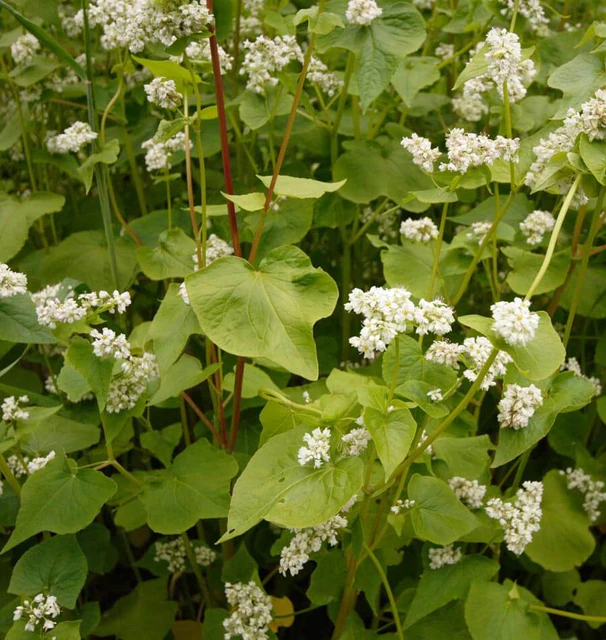
Growing Buckwheat for Chickens
Buckwheat is a fast-growing warm-season annual that can provide rapid soil cover, weed suppression, pollinator support, and a harvest of mature grain for limited supplemental poultry feeding. It fits especially well into short planting windows, unused garden spaces, and diversified feed-crop systems—but successful grain harvest requires careful timing because buckwheat ripens unevenly and can shatter easily.
Yes. Chickens can eat clean, mature buckwheat grain as a supplemental feed source. Buckwheat can provide energy, enrichment, and crop diversity, but it should not replace a complete poultry ration. Green buckwheat foliage should not be treated the same as mature grain because it may contain fagopyrins associated with photosensitivity concerns.
🌾 Crop Snapshot
🐔 Backyard Chicken Planner Recommendation
Buckwheat is a strong choice for chicken keepers who want a quick-growing crop that can fill an open garden window, suppress weeds, attract pollinators, and produce a modest amount of supplemental grain. It is especially useful between spring and fall crops because it develops rapidly and does not require the long season needed by corn, sorghum, or sunflowers.
Its value depends on your goals. Buckwheat is easier to establish than it is to harvest cleanly. The plants continue flowering while earlier seeds mature, so the crop rarely ripens all at once. Waiting too long may increase the number of mature seeds while also increasing grain loss from shattering.
Best For
- Gardeners with a short open planting window.
- Chicken keepers wanting a quick annual grain crop.
- Growers interested in pollinator support.
- Homesteaders wanting rapid summer soil cover.
- Gardeners trying to suppress weeds before the next crop.
- Small-scale growers willing to harvest and clean grain by hand.
Think Twice If
- You need a crop that tolerates frost.
- You want a dependable high-volume grain harvest.
- You cannot monitor the crop as seeds begin maturing.
- You require every plant to ripen uniformly.
- You cannot dry or clean harvested grain.
- You intend to feed unrestricted green foliage.
- You expect buckwheat to replace complete poultry feed.
📋 Buckwheat Quick Facts
Buckwheat is one of the fastest feed-garden crops to move from planting to flowering. It can cover bare ground quickly, attract large numbers of beneficial insects, and produce usable mature seed within a relatively short season. Its greatest limitations are shallow rooting, frost sensitivity, uneven ripening, and the labor required to collect small grain efficiently.
The crop germinates and establishes quickly when planted into warm, prepared soil.
Buckwheat contributes mature grain, pollinator value, cover-crop benefits, and seasonal diversity.
Buckwheat is frost-sensitive and may be damaged or killed by freezing temperatures.
It grows during warm weather but may perform poorly during prolonged extreme heat.
Its shallow root system makes prolonged dry conditions a significant yield concern.
The abundant flowers can attract bees and many beneficial insects.
A dense stand can shade the soil quickly and outcompete many emerging weeds.
Properly dried and cleaned grain can be stored for later supplemental use.
Uneven ripening and seed shattering make hand harvest more difficult than establishment.
🧭 What You’ll Learn
This guide follows buckwheat from site selection and planting through flowering, grain maturity, harvest, drying, cleaning, storage, and cautious supplemental feeding. It also explains why buckwheat foliage should not be treated the same way as mature grain.
🌱 Is Buckwheat a Good Choice for Your Backyard Feed Garden?
Buckwheat is a good choice for chicken keepers who want a fast-growing, low-input crop that supports pollinators, improves soil coverage, and provides a supplemental grain source. It is especially useful when a short growing season, limited garden space, or poor soil conditions make longer-season crops more difficult.
- Good fit: Gardeners who want a quick summer crop, pollinator support, weed suppression, or a small supplemental grain harvest.
- Less ideal fit: Growers looking for a major replacement for commercial poultry feed or a crop that produces large quantities of feed calories from a small area.
- Best use: A diversified feed garden where buckwheat is combined with other crops rather than grown as the only chicken feed source.
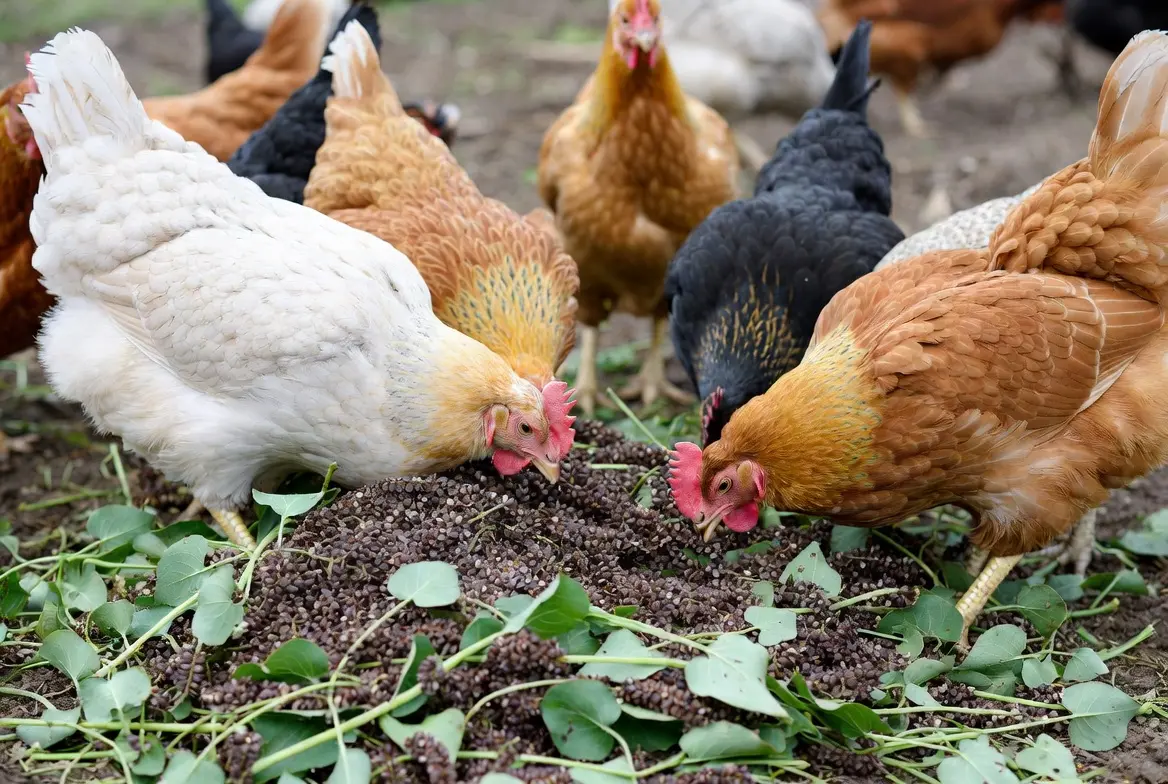
🐔 Chickens Eating Buckwheat
Buckwheat can be offered to chickens as a supplemental feed source when properly prepared. Mature grain should be introduced gradually and used alongside a complete poultry ration rather than replacing balanced feed.
🐔 Is Buckwheat a Good Crop for Chickens?
Buckwheat can be a useful supplemental crop for backyard chickens when the mature grain is harvested, dried, cleaned, and fed in limited quantities. Its seeds contribute energy and protein, while the crop itself provides broader benefits through flowering, weed suppression, soil coverage, and seasonal biodiversity.
Buckwheat should not be judged only by the amount of grain it produces. For many small growers, its greatest value comes from combining several roles within one short planting period. It can protect bare soil, crowd out many weeds, support pollinators, and then produce a harvestable seed crop before the next planned planting.
- It establishes quickly in warm soil.
- It flowers within a relatively short period.
- It fits between other garden crops.
- Dense growth can suppress many annual weeds.
- Flowers support bees and beneficial insects.
- Mature grain can be dried and stored.
- Whole plants can be cut before seed maturity and used as organic matter.
- Small plots can provide enrichment and crop diversity.
The preferred poultry-feed use is clean mature grain. Green buckwheat foliage can contain fagopyrins associated with photosensitivity concerns in animals. Do not assume that because the seed is usable, unrestricted access to living plants or large quantities of green foliage is equally appropriate.
Buckwheat grain does not provide the complete balance of energy, essential amino acids, calcium, vitamins, and minerals needed by growing chicks or laying hens. It should supplement an age-appropriate complete feed rather than replace it.
Buckwheat is only one of many supplemental foods that backyard chicken keepers may consider. For preparation guidance, feeding methods, benefits, limitations, and safety information, visit our complete What Can Chickens Eat? guide.
💰 Why Grow Buckwheat Instead of Buying More Feed?
Growing buckwheat will not eliminate the need for balanced poultry feed. Its financial value comes from producing several benefits from one short-season planting. A successful stand can reduce weed pressure, protect soil, attract beneficial insects, produce organic matter, and provide a small grain harvest.
The seed itself is relatively inexpensive, and buckwheat does not usually require heavy fertilizer applications. For a gardener who already owns basic hand tools, tarps, screens, and storage containers, the direct establishment cost can remain modest.
⏱️ Fast Turnaround
Buckwheat reaches flowering and grain development much faster than many traditional feed grains.
🌱 Soil Coverage
Rapid canopy formation protects exposed soil and reduces the space available to many weeds.
🐝 Multiple Benefits
The same crop can support insects, produce biomass, suppress weeds, and yield supplemental grain.
Buckwheat is less economical when grown only for poultry grain on a very small scale. Hand cutting, drying, threshing, cleaning, and winnowing may take more time than the harvested feed is worth. The strongest return comes when the grower also values pollinator support, soil protection, weed suppression, and crop rotation.
Buckwheat is one option for a backyard feed garden, but different crops provide different advantages. Growers may also want to compare buckwheat with other grain and seed crops such as barley, wheat, oats, and proso millet when planning a diversified chicken feed garden.
🌍 Buckwheat Is Not Wheat
Despite its name, buckwheat is not a type of wheat and is not a true cereal grain. Wheat belongs to the grass family, while buckwheat is a broadleaf plant in the knotweed family. Its triangular seeds are commonly treated like grain in cooking and feed, which is why buckwheat is often described as a pseudocereal.
This distinction matters in the garden. Buckwheat grows differently from wheat, matures much faster, produces broad leaves instead of grassy blades, and flowers continuously while seed begins ripening lower on the plant.
The word “buckwheat” refers to the seed’s historical use as a grain-like food, not to a botanical relationship with wheat. Gardeners should not expect buckwheat to behave like wheat, oats, millet, or other cereal grasses.
🐝 Why Pollinators Love Buckwheat
Buckwheat can begin producing flowers only a few weeks after planting under favorable conditions. The clusters of small white or pinkish flowers provide nectar and pollen that attract bees, flies, wasps, beetles, and other beneficial insects.
For chicken keepers, this creates value beyond grain. A flowering buckwheat patch can increase insect activity around the garden, support biodiversity, and provide hunting opportunities for chickens when birds are allowed controlled access near—but not unrestricted access within—the planting.
- Rapid flower production.
- Useful during seasonal nectar gaps.
- Attracts many types of beneficial insects.
- Supports nearby fruit and vegetable gardens.
- Adds movement and biodiversity around chicken areas.
- Can be succession planted for extended flowering.
Chickens may scratch young plants, damage roots, consume seed, flatten stems, or disturb flowering growth. Use fencing or supervised access if grain harvest is one of your goals.
For growers building a diversified chicken forage and feed garden, buckwheat can also be paired with other multipurpose crops such as white clover , cowpeas , and field peas .
🌱 Why Buckwheat Is Used as a Cover Crop
Buckwheat is widely valued as a short-season cover crop because it germinates rapidly and develops a broad leafy canopy. Once established, the stand can shade the soil and compete strongly with many small annual weeds.
The crop is especially useful where a garden bed will remain empty for several weeks during warm weather. Rather than allowing weeds to occupy the space, a gardener can plant buckwheat, enjoy the flowers, and then either harvest mature grain or cut the crop before seed formation.
🌿 Weed Suppression
Dense foliage reduces sunlight reaching newly emerging weeds.
🌎 Soil Protection
Living plants help shield bare soil from erosion and intense summer sun.
♻️ Organic Matter
Cut plants can be composted or incorporated according to the gardener’s soil-management plan.
Good suppression depends on rapid, even establishment. Sparse stands, dry soil, poor seed coverage, or existing perennial weeds may allow unwanted plants to remain competitive.
🏡 Why Homesteaders Grow Buckwheat
Buckwheat appeals to homesteaders because it works quickly and serves many purposes without requiring a large investment. It can fill a garden gap, provide flowers for pollinators, shade bare soil, create organic matter, produce edible grain, and support a diversified poultry-feed system.
🌾 Supplemental Grain
Clean mature seed can be reserved for household use, planting seed, or limited poultry supplementation.
🐝 Beneficial Insects
Flowering plants support pollinators and predatory insects that may benefit the wider garden.
🌱 Garden Rotation
The crop fits into short spaces between vegetables and other annual plantings.
🌿 Weed Management
Rapid growth helps prevent many weeds from dominating temporarily unused ground.
🍽️ Human Food
Properly processed buckwheat grain can be used for flour, groats, pancakes, porridge, and other foods.
🧺 Seed Saving
Mature clean seed can be saved for future plantings when crop identity and quality are maintained.
🌱 Understanding Buckwheat Growth
Buckwheat grows differently from traditional cereal grains. It develops broad leaves, hollow branching stems, and clusters of small flowers that may continue opening even while the earliest seeds are already maturing.
This continuous flowering pattern is one reason buckwheat is valuable to pollinators, but it also creates the crop’s greatest harvesting challenge. A single plant may carry unopened flowers, green developing seed, mature brown seed, and shattered seed at the same time.
-
Germination
Seed absorbs moisture and usually emerges quickly when planted into warm, moist soil. -
Early Leaf Growth
Broad leaves develop rapidly and begin shading the soil surface. -
Canopy Formation
Plants branch and fill open spaces, helping suppress many small annual weeds. -
Flowering
Clusters of white or pink-tinged flowers attract bees and beneficial insects. -
Seed Development
Triangular seeds form while new flowers may continue opening elsewhere on the plant. -
Uneven Maturity
Lower and earlier flowers may produce mature dark seed while later seed remains green. -
Harvest Decline
Mature seed begins loosening and falling from the plant as weathering and shattering increase.
Buckwheat does not normally wait for every seed to ripen before releasing the earliest mature grain. Successful harvest depends on choosing a reasonable compromise between mature seed percentage and shattering loss.
🌾 Choosing a Buckwheat Variety
Most backyard growers will encounter common buckwheat sold as cover-crop seed, food-production seed, or grain seed. Variety availability varies by region, and some seed may be sold without a clearly identified cultivar name.
For a chicken feed garden, the most important considerations are reliable germination, adaptation to local conditions, intended use, seed purity, and freedom from chemical treatment.
| Characteristic | What to Consider |
|---|---|
| Intended Use | Choose grain or food-grade planting seed when grain harvest is the goal rather than relying on unidentified seed intended only for cover cropping. |
| Maturity | Earlier-maturing selections may be useful in short growing windows or northern climates. |
| Plant Height | Taller growth may produce more biomass but can be more vulnerable to lodging. |
| Seed Uniformity | Clean, uniform seed improves planting consistency and later grain sorting. |
| Seed Treatment | Do not use chemically treated seed for poultry feeding or household food production. |
| Regional Adaptation | Locally recommended varieties may flower and mature more reliably under regional day length and weather patterns. |
Seed coated with fungicides, insecticides, dyes, or other chemical treatments must not be fed to chickens or used for human food. Confirm the seed label before planting when the eventual grain harvest may enter the food or feed system.
🌎 Where Buckwheat Grows Best
Buckwheat grows across much of North America during frost-free weather. It performs best under moderate summer temperatures, full sunlight, well-drained soil, and dependable moisture during establishment and flowering.
The crop is often described as adaptable because it can grow on soils that are not ideal for demanding crops. That does not mean it performs equally well under every condition. Waterlogged soil, severe drought, extreme heat, frost, and heavy nitrogen fertility can all reduce stand quality or grain yield.
☀ Full Sun
Strong sunlight supports rapid growth, flowering, and seed production.
🌤 Moderate Warmth
Buckwheat prefers warm frost-free weather without prolonged extreme heat.
🌱 Good Drainage
Roots require oxygen and may decline in saturated or persistently wet soil.
Buckwheat is highly frost-sensitive. A light frost may damage flowers and leaves, while a harder freeze can kill the stand. Plant only when enough frost-free time remains for your intended goal.
🗓 Regional Planting Calendar
Buckwheat can be planted whenever warm soil and a dependable frost-free window are available. Many gardeners use it after spring vegetables finish, before fall crops are planted, or in open beds during summer.
| Region | Typical Planting Window | Important Consideration |
|---|---|---|
| Northern U.S. | Late spring through midsummer | Allow enough time for grain maturity before the first expected autumn frost. |
| Midwestern States | Late spring through late July, depending on purpose | Summer heat and drought may reduce flowering and seed set. |
| Mid-Atlantic | Late spring through midsummer | Avoid planting so late that grain maturity overlaps early frost. |
| Southern States | Spring and late-summer windows may be preferable | Prolonged midsummer heat can reduce performance. |
| Mild Coastal Areas | Multiple frost-free windows may be available | Consider rainfall, humidity, and harvest weather rather than temperature alone. |
A cover crop planted for flowers and weed suppression needs less time than a crop intended to produce mature grain. Before planting, decide whether your goal is soil coverage, pollinator bloom, green biomass, or a harvestable seed crop.
📅 Calculating Your Planting Window
To estimate whether enough time remains for buckwheat grain production, work backward from your average first autumn frost date. Include time for germination, vegetative growth, flowering, seed development, harvest, and postharvest drying.
- Find your average first frost date. Use a reliable local gardening or extension reference rather than a broad state average.
- Estimate the crop’s maturity period. Use the seed supplier’s guidance when a named variety is available.
- Add a weather buffer. Cool weather, drought, excessive heat, and poor establishment can delay maturity.
- Allow time for drying. Harvested plants or seed heads may need additional drying before threshing and storage.
- Plant earlier when grain is the priority. A late planting may still produce flowers and biomass even when mature seed is unlikely.
📍 Choosing the Best Site
Buckwheat is most useful where its rapid growth can fill an otherwise open space without interfering with nearby crops. Choose a location with full sun, workable soil, drainage, and enough room to harvest without knocking mature seed from surrounding plants.
- Empty beds between spring and fall vegetables.
- Temporary feed-crop plots.
- Sunny garden borders.
- Areas needing quick summer soil coverage.
- Future planting areas being prepared for another crop.
- Pollinator strips protected from unrestricted poultry access.
Buckwheat does not tolerate standing water or persistently saturated soil. Low areas, compacted clay, and beds receiving runoff may produce weak roots, yellowing plants, lodging, and disease problems.
🌱 Preparing the Soil
Buckwheat seed establishes best in a relatively clean, shallow, firm seedbed. Large clods, thick mulch, heavy plant residue, or deeply buried seed can create an uneven stand that weakens the crop’s ability to suppress weeds.
- Remove established weeds. Buckwheat suppresses many emerging weeds but does not reliably overcome large existing weeds or persistent perennial roots.
- Loosen only as needed. Prepare enough loose soil for shallow seed coverage without creating a deep powdery bed.
- Level the surface. An even surface supports uniform planting depth and moisture.
- Correct major drainage problems. Do not expect buckwheat to repair waterlogged soil during the same season.
- Avoid excessive fertilizer. High fertility, especially excessive nitrogen, can encourage soft growth and lodging.
Very loose soil may allow seed to settle too deeply after rain or watering. After preparation, the surface should be fine enough for good seed contact but firm enough to support shallow planting.
🌾 How to Plant Buckwheat
Buckwheat can be broadcast by hand across a prepared bed or planted in shallow rows. Broadcast planting generally creates better ground coverage, while rows make cultivation, observation, and hand harvest somewhat easier.
- Wait until frost danger has passed. Plant when soil is warm and the forecast does not suggest damaging cold.
- Distribute seed evenly. Avoid thick piles and large bare gaps.
- Cover the seed shallowly. Rake or press seed into the upper layer of soil rather than burying it deeply.
- Firm the surface. Good seed-to-soil contact supports even germination.
- Water gently. Use light irrigation that does not wash seed into low spots.
- Protect the area. Prevent chickens, wild birds, and heavy rain from removing or redistributing seed before germination.
For small hand-managed plots, sowing in narrow blocks or wide bands can provide good canopy coverage while still allowing access from the sides during harvest.
📏 Seeding Depth and Spacing
Buckwheat is normally planted shallowly because seedlings need to emerge quickly and uniformly. Exact seeding rate depends on planting method, seed size, soil condition, intended use, and local recommendations.
| Planting Method | General Approach |
|---|---|
| Broadcast Stand | Distribute seed evenly, lightly rake it into the soil, and firm the surface. |
| Wide Rows | Plant shallow rows close enough for the canopy to meet as plants mature. |
| Small Test Plot | Use a clearly measured bed so future seed use, yield, and labor can be compared. |
| Pollinator Strip | Plant densely enough for continuous flowering but leave access for observation and cutting. |
Deep planting can delay emergence, weaken seedlings, and create an uneven stand. Poor establishment reduces weed suppression and may allow crusted soil or heavy rain to prevent emergence.
🪴 Can Buckwheat Grow in Raised Beds?
Yes. Raised beds can provide good drainage and a manageable harvest area, especially when buckwheat is used between vegetable crops. However, grain production may not be the most valuable use of a small premium raised bed.
Advantages
- Good drainage.
- Easy soil preparation.
- Convenient observation.
- Simple hand harvest.
- Useful between vegetable plantings.
Limitations
- May displace higher-value vegetables.
- Produces limited grain in a small area.
- Can shade neighboring crops.
- May reseed if mature grain falls.
- Requires cleanup before the next planting.
🪣 Growing Buckwheat in Containers
Buckwheat can grow in large containers, tubs, or fabric planters, but container production is better suited to pollinator support, demonstration, seed saving, or small enrichment harvests than meaningful feed production.
- Easy to place near pollinator gardens.
- Allows controlled soil and drainage.
- Useful for learning the crop’s growth stages.
- Simplifies collection of shattered seed.
- Prevents spread into permanent beds.
Buckwheat has a shallow root system, and container soil may dry much faster than garden soil. Frequent moisture stress can reduce flowering and grain development.
💧 Water Requirements
Buckwheat needs adequate moisture for germination, canopy formation, flowering, and seed development. Its shallow roots limit access to deeper soil moisture, so prolonged drought can reduce growth quickly.
At the same time, excessive irrigation and poor drainage can weaken roots and increase lodging or disease risk. The goal is even moisture without standing water.
| Growth Stage | Water Need |
|---|---|
| After Planting | Keep the upper soil layer moist until seedlings emerge. |
| Early Growth | Prevent the shallow root zone from drying completely. |
| Canopy Formation | Provide moisture when rainfall is insufficient to maintain active growth. |
| Flowering | Avoid severe moisture stress that may reduce flower retention and seed set. |
| Seed Maturity | Reduce unnecessary irrigation as harvest approaches, especially where humid conditions increase mold risk. |
Drip irrigation, soaker hoses, or careful ground-level watering can reduce lodging and avoid repeatedly wetting flowers and developing seed clusters.
🌱 Fertilizing Buckwheat
Buckwheat generally performs best under moderate fertility. It can grow on soils that are less fertile than those required by demanding vegetables, but it should not be expected to produce strong grain yields in severely depleted or chemically imbalanced soil.
Excess nitrogen is a more common backyard problem than insufficient nitrogen. Heavy fertilization can produce tall, soft stems and abundant leaves that lodge before harvest.
Too much nitrogen may increase vegetative growth while reducing stand strength, harvest convenience, and grain quality. A soil test is the best basis for nutrient decisions.
- Finished compost used moderately.
- Balanced fertilizer only when testing indicates a need.
- Correction of major phosphorus or potassium deficiencies.
- Organic matter added during earlier crop rotations.
- Appropriate soil pH management.
🌿 Weed Management
Buckwheat suppresses weeds most effectively when it establishes quickly and evenly. The broad leaves form a canopy that reduces sunlight reaching the soil, but this benefit develops only after the crop gains a head start.
- Remove existing large weeds before planting.
- Prepare an even seedbed.
- Use clean viable seed.
- Plant at an appropriate density.
- Maintain moisture during establishment.
- Reseed major bare areas promptly.
- Prevent chickens from disturbing young plants.
Buckwheat can shade many annual seedlings but will not eliminate established bindweed, bermudagrass, nutsedge, thistle, or other aggressive perennial weeds. These should be managed before planting.
🐝 Managing Buckwheat for Pollinators
A buckwheat stand can begin supporting pollinators soon after flowering begins. To preserve that value, avoid unnecessary insecticide use and allow at least part of the stand to remain in bloom long enough for beneficial insects to use it.
- Plant in full sun where insects can locate the flowers easily.
- Avoid spraying open blooms.
- Provide nearby water sources that do not create drowning hazards.
- Use succession plantings when extended flowering is desired.
- Keep unrestricted chickens out of the flowering stand.
- Observe bee activity before mowing or cutting.
- Harvest during cooler periods when insect activity is lower if practical.
Leaving the crop flowering longer supports insects but also allows earlier mature seed to shatter. Decide whether your top goal is pollinator bloom, grain recovery, or a compromise between the two.
🌬 Lodging and Storm Damage
Buckwheat stems can bend or collapse during heavy rain, wind, or excessive vegetative growth. Lodged plants may continue flowering, but tangled stems make harvest slower and increase contact with damp soil.
- Avoid excessive nitrogen.
- Do not overwater.
- Use appropriate stand density.
- Avoid highly exposed windy sites.
- Harvest before mature plants deteriorate excessively.
- Keep foot traffic and poultry out of the crop.
Seed clusters touching wet soil may develop mold, discoloration, or contamination. Do not mix questionable material with clean grain.
🐛 Common Pests, Diseases, and Wildlife Problems
Buckwheat often grows with relatively few serious pest problems, but damage can still occur. Young seedlings are most vulnerable to birds, poultry, rabbits, and dry weather, while maturing grain attracts seed-eating wildlife.
🐦 Birds and Poultry
- Consume planted seed.
- Pull young seedlings.
- Eat maturing grain.
- Knock seed from plants.
- Scatter harvested material.
🐛 Insects
- Aphids.
- Grasshoppers.
- Occasional leaf-feeding insects.
- Stored-grain insects after harvest.
- Pollinating insects that should not be mistaken for pests.
🍄 Disease and Decay
- Root decline in saturated soil.
- Leaf or stem disease under humid conditions.
- Mold on lodged seed clusters.
- Mold during inadequate drying.
- Storage spoilage from excess moisture.
Drying, roasting, grinding, or mixing moldy grain with good feed does not reliably make it safe. Discard moldy, musty, heated, fermented, or otherwise spoiled buckwheat.
🦌 Protecting Buckwheat From Wildlife
Wildlife pressure varies by location. Deer may browse plants, rabbits may damage seedlings, and birds may consume both newly planted seed and mature grain. Rodents may enter stored grain after harvest.
- Protect newly planted seed. Use temporary netting, row cover, or another appropriate barrier until plants emerge.
- Fence the plot if necessary. Low fencing may discourage rabbits, while deer require taller protection.
- Monitor grain development. Bird pressure often increases as seeds darken and mature.
- Harvest promptly. Do not leave a mature crop exposed longer than necessary.
- Store grain securely. Use sealed containers in a dry rodent-resistant area.
⚠️ Common Beginner Mistakes
Buckwheat is easy to plant, but growers often lose much of the crop because they underestimate how quickly it develops and how unevenly it matures.
- Planting before frost danger has passed.
- Planting too late for grain maturity.
- Burying seed too deeply.
- Using treated seed where food or feed harvest is intended.
- Allowing young chickens into the plot.
- Applying excessive nitrogen.
- Assuming drought tolerance is high.
- Waiting for every seed to mature before harvesting.
- Handling mature plants roughly and causing shattering.
- Storing grain before it is fully dry.
- Feeding green foliage as though it were the same as mature grain.
- Expecting buckwheat to replace complete poultry feed.
Waiting for uniform maturity usually causes the earliest ripe seeds to fall before the latest seeds are ready. Watch the stand closely and accept that some immature seed will remain at harvest.
🌸 Recognizing Flowering and Seed Development
Buckwheat flowers appear in clusters near the ends of branches. After successful pollination, the flowers fade and small green triangular seeds begin forming. These seeds gradually enlarge and darken as they mature.
| Crop Appearance | Likely Stage |
|---|---|
| Mostly leaves with no flower clusters | Vegetative growth |
| Numerous open white or pinkish flowers | Active flowering and pollinator stage |
| Small green triangular seeds | Early seed development |
| Mixed green, tan, and dark seed | Uneven maturity approaching harvest |
| Many dark seeds with increasing seed drop | Harvest urgency and shattering risk |
🌾 Knowing When Buckwheat Is Ready to Harvest
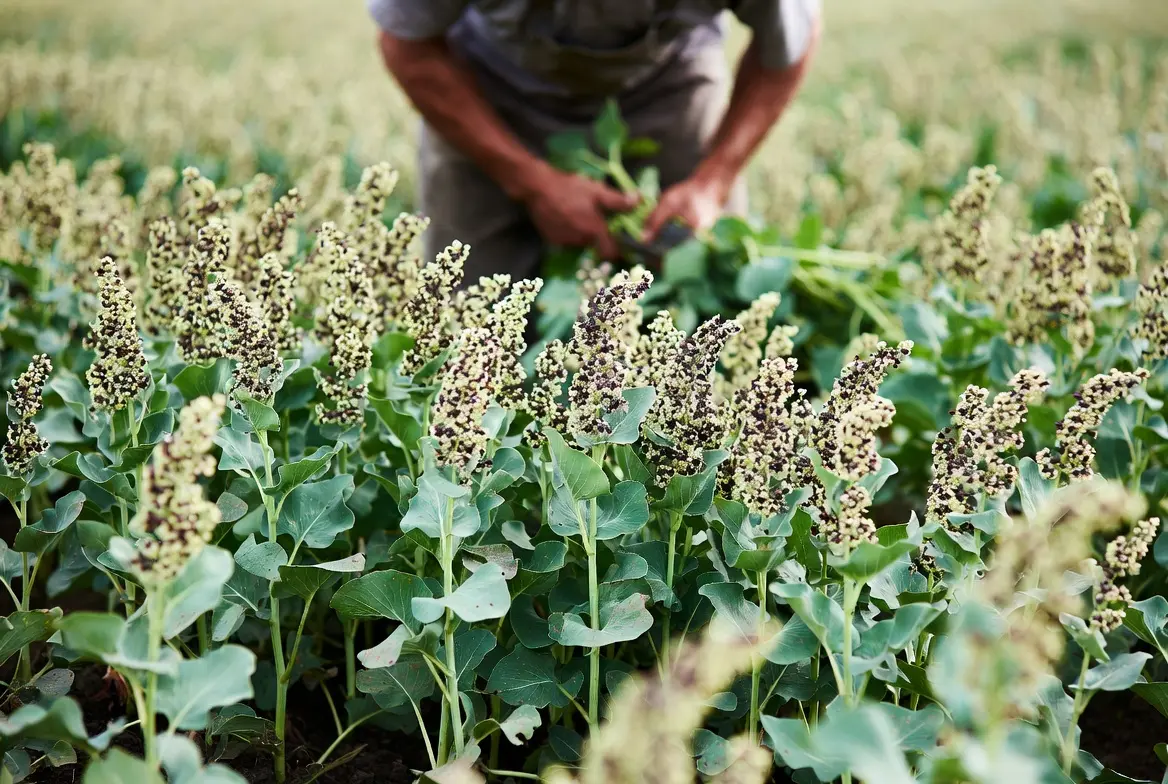
🌾 Harvesting Buckwheat
Buckwheat harvest timing requires careful observation because seeds mature unevenly. Harvesting at the correct stage helps capture mature grain while reducing losses from shattering.
Buckwheat grain is normally harvested when a substantial portion of the seed has matured and darkened, but before shattering loss becomes excessive. The exact balance varies with weather, wildlife pressure, variety, and the grower’s processing method.
- Many lower and earlier seeds have turned dark brown or nearly black.
- Some seed remains green or partially mature.
- Flowering has slowed but may not have stopped completely.
- Mature seeds detach more easily when handled.
- Seed is beginning to fall beneath the plants.
- Cool, dry harvest weather is available.
A completely uniform stand is unlikely. Waiting for the last green seeds to mature may result in losing a large share of the earliest grain.
- Seeds dropping before harvest: Buckwheat can shatter when left too long, so harvest timing may require balancing mature grain development with seed loss.
- Uneven seed maturity: Different parts of the plant may mature at different times. Small growers may choose to harvest when the majority of seeds are mature rather than waiting for every seed.
- Poor drying: Freshly harvested buckwheat should be dried thoroughly before storage to reduce spoilage risk.
✂️ Harvesting Buckwheat by Hand
Small buckwheat plots can be harvested with hand pruners, a sickle, garden shears, or another clean cutting tool. Because mature seed falls easily, work gently and place cut plants directly onto a tarp, sheet, or large collection container.
Harvesting during a cool, dry morning may reduce handling loss compared with cutting brittle plants during the hottest part of the day. Avoid harvesting when plants are wet from rain or heavy dew unless drying facilities are immediately available.
- Prepare the drying area first. Set out tarps, racks, screens, or breathable collection containers before entering the plot.
- Inspect the grain. Confirm that a substantial portion of the seeds has darkened and matured.
- Cut gently. Cut stems near the base or collect manageable bundles without shaking the plants excessively.
- Place plants directly on a tarp. A tarp captures seed that falls during handling.
- Keep questionable material separate. Do not mix muddy, moldy, badly lodged, chemically exposed, or wildlife-contaminated plants with clean grain.
- Move the crop promptly. Transfer harvested plants to a protected drying area before rain, nighttime condensation, or wildlife causes additional loss.
A large tarp beneath the plants can recover a meaningful amount of grain that would otherwise fall into the soil during cutting, bundling, transport, and drying.
Every unnecessary movement may release mature seed. Avoid dragging bundles across the garden, tossing them into piles, or repeatedly moving them between containers.
🌤 Drying Buckwheat After Harvest
Buckwheat plants and seed must be dried thoroughly before long-term storage. Harvested material may contain mature dry grain, immature green grain, leaves, stems, flowers, and other plant matter with very different moisture levels.
The crop can be dried as loose plants, small bundles, cut seed-bearing branches, or partially threshed grain. Small-scale growers often find it easier to dry the plants first and thresh after the stems and seed clusters have become crisp.
- Protected from rain and dew.
- Well ventilated.
- Dry rather than humid.
- Protected from chickens and wild birds.
- Protected from rodents.
- Large enough to spread material thinly.
- Easy to inspect every day.
Grain that feels cool, damp, soft, or clammy should not be sealed in a container. Excess moisture can lead to heating, fermentation, mold growth, insect activity, and loss of the entire harvest.
🧺 Drying Methods for Small Growers
Drying on Screens
Spread seed-bearing branches in a shallow layer across elevated screens with airflow above and below.
Small Hanging Bundles
Suspend loose bundles over a tarp in a dry protected building. Keep bundles small enough for air to move through them.
Loose Tarp Drying
Spread plants thinly on a clean tarp and turn them regularly. Do not leave the tarp exposed to overnight dew.
Large piles trap heat and moisture. Even if the outside feels dry, the center may remain warm, damp, and vulnerable to mold.
🌾 Threshing Buckwheat
Threshing separates the grain from the dried plants. Buckwheat threshes relatively easily once the crop is dry, but the small seeds can scatter widely if the work area is not contained.
For a small backyard harvest, threshing may be as simple as rubbing dry seed clusters between gloved hands, beating small bundles inside a clean barrel, walking gently over plants enclosed within a tarp, or shaking seed heads inside a large bag.
- Confirm the crop is dry. Dry stems and seed clusters should feel crisp rather than flexible or damp.
- Work over a contained surface. Use a tarp, barrel, tote, clean floor, or deep collection tray.
- Apply gentle pressure. Rub, shake, tap, or beat the material enough to release mature grain.
- Remove large stems. Lift away coarse plant material before finer cleaning.
- Repeat only as needed. Excessive threshing creates more broken stems, dust, and chaff that must later be removed.
Green or incompletely developed seeds may not thresh as easily as mature grain. Do not force damp immature material into the stored grain simply to increase the apparent harvest.
💨 Winnowing and Cleaning Buckwheat Grain
Freshly threshed buckwheat contains leaves, stems, flower parts, empty hulls, dust, immature seed, weed seed, insects, and other debris. Cleaning improves storage safety and makes later household or poultry use more predictable.
Winnowing uses moving air to separate lighter chaff from heavier grain. This can be done by pouring the mixture slowly between containers in a light breeze or in front of a carefully controlled fan.
- Screen out large debris. Use a coarse screen or remove stems and leaves by hand.
- Winnow gradually. Pour small amounts so the airflow can carry away light material without losing excessive grain.
- Remove immature seed. Separate soft, green, shriveled, damaged, or unusually light seed where practical.
- Inspect for weed seed. Do not assume every seed in the harvest is buckwheat.
- Dry again if necessary. Cleaning may expose grain that still contains excess moisture.
Before winnowing the entire harvest, experiment with one small batch to find an airflow strength that removes chaff without blowing away good seed.
📦 Storing Buckwheat Grain
Clean, thoroughly dried buckwheat can be stored for later use. Storage success depends on moisture control, sanitation, temperature, insect exclusion, and rodent protection.
| Storage Factor | Recommended Approach |
|---|---|
| Container | Use a clean food-safe bucket, sealed container, or metal grain can. |
| Location | Choose a cool, dry, dark, rodent-resistant storage area. |
| Moisture | Store only fully dried grain with no condensation or damp chaff. |
| Inspection | Check periodically for insects, mold, heating, moisture, odor, or rodent damage. |
| Labeling | Record the crop, variety if known, harvest date, and intended use. |
| Rotation | Use the oldest sound grain first. |
Do not feed grain that is moldy, musty, fermented, unusually hot, insect-damaged beyond reasonable cleaning, contaminated by rodents, or exposed to chemicals. Processing does not reliably make spoiled grain safe.
🐔 Feeding Buckwheat Grain to Chickens
The most straightforward poultry use for buckwheat is clean mature grain offered as a limited supplement. Whole seed can provide pecking activity and dietary variety, while cracked or ground grain may be used only when the keeper understands that finer processing shortens storage life and does not make the crop nutritionally complete.
Buckwheat should be introduced gradually while the flock continues receiving an age-appropriate complete feed. A chicken’s willingness to eat a homegrown grain does not mean the grain supplies everything the bird requires.
- Use only positively identified mature buckwheat grain.
- Feed clean, dry, sound grain.
- Introduce it gradually.
- Offer modest measured quantities.
- Keep complete feed continuously available.
- Provide appropriate insoluble grit to birds consuming whole grain.
- Observe flock acceptance and manure condition.
- Clean up grain that becomes wet or contaminated.
Protein percentage does not describe amino-acid balance, calcium, available phosphorus, vitamins, minerals, energy, fiber, or digestibility. Buckwheat should not replace complete feed simply because its crude protein appears useful.
🌾 Whole Buckwheat Grain
Whole mature grain requires the least processing and generally stores better than cracked or ground grain. It can be offered in a feeder, scattered across a clean dry surface, or incorporated into supervised enrichment.
Advantages
- Minimal processing.
- Better storage stability than ground grain.
- Useful pecking enrichment.
- Easy to measure.
- Less dust than ground grain.
Limitations
- Some birds may initially ignore it.
- Whole hulls contribute fiber.
- Small seed may be scattered into litter.
- Consumption can be difficult to monitor when broadcast.
- It remains nutritionally incomplete.
Adult chickens consuming whole grain should have access to appropriately sized insoluble grit unless they reliably obtain suitable grit from their environment.
⚙️ Cracked or Ground Buckwheat
Cracking or grinding can make buckwheat easier to mix with other ingredients, but processing exposes more surface area to oxygen and moisture. This generally reduces storage life and increases the risk of rancidity, odor absorption, insects, and mold.
- Process only small quantities at a time.
- Use clean equipment.
- Avoid creating excessive fine dust.
- Store processed grain in a sealed container.
- Keep it cool and dry.
- Use it more quickly than whole grain.
- Discard material with unusual odor, heating, or moisture.
Changing particle size may improve handling or acceptance, but it does not correct nutritional deficiencies. Ground buckwheat is still only one ingredient.
🌿 Green Buckwheat and Fagopyrin Caution
Buckwheat foliage, flowers, and other green plant parts can contain compounds called fagopyrins. In susceptible animals, substantial exposure has been associated with photosensitivity, especially when light-colored skin is exposed to sunlight.
The concentration and practical risk vary with plant part, maturity, intake, species, and individual conditions. Because safe backyard poultry intake levels for unrestricted green buckwheat were not established for this guide, the conservative recommendation is to prioritize mature grain and prevent heavy consumption of green foliage.
Do not intentionally turn chickens into a dense living buckwheat stand and assume all plant parts are harmless simply because mature seed can be used as feed. Protect the crop during growth and control any postharvest access.
If birds gain access to large amounts of green buckwheat and later show unusual skin irritation, redness, swelling, discomfort in sunlight, reduced activity, or other concerning signs, remove access and contact a qualified poultry veterinarian.
🌾 Can Chickens Eat Dried Buckwheat Seed Heads?
Small quantities of thoroughly dried mature seed-bearing material may be used as supervised enrichment, but intact stems and seed heads make intake difficult to measure and create more waste than cleaned grain.
Seed heads should be dry, free from mold, free from chemical contamination, and stripped of long strings, wire, netting, or coarse material that could create entanglement or injury.
- Place a small dried bundle in a clean contained area.
- Use a tray beneath it to capture fallen grain.
- Supervise initial flock access.
- Prevent dominant birds from monopolizing the bundle.
- Remove leftover stems and damp material.
For measured supplemental feeding, cleaned grain is usually preferable to intact plants because it is easier to inspect, store, portion, and remove if contamination occurs.
🥣 Buckwheat Nutritional Overview
Buckwheat grain contains useful energy, protein, fiber, minerals, and other nutrients, but composition varies with variety, growing conditions, hull content, maturity, processing, and analytical method.
Its value should be considered within the complete diet. Mature grain can contribute variety and some nutritional value, but it is not naturally balanced for poultry requirements.
| Nutritional or Feeding Category | General Rating |
|---|---|
| Supplemental Energy | ★★★☆☆ |
| Protein Contribution | ★★★☆☆ |
| Complete-Ration Suitability | ★☆☆☆☆ |
| Whole-Grain Storage Value | ★★★★☆ |
| Enrichment Value | ★★★★☆ |
| Processing Simplicity | ★★★☆☆ |
Do not assume one published buckwheat analysis precisely represents homegrown grain. Hull percentage, variety, maturity, drying, cleaning, and storage can all affect the final product.
🍽️ Household Uses for Buckwheat
Buckwheat is also a human food crop. Properly cleaned and processed grain may be used for groats, porridge, flour, pancakes, noodles, and other foods. This can make a small harvest more valuable than feeding every seed to chickens.
Household Food
The best clean grain may be reserved for human food when appropriate processing equipment and food-safety practices are available.
Planting Seed
Healthy mature seed can be labeled and reserved for the following season.
Poultry Supplement
Sound surplus grain can provide measured flock enrichment and dietary variety.
Label household food, planting seed, and poultry grain separately. Never downgrade moldy, chemically treated, or contaminated grain into chicken feed.
🌱 Saving Buckwheat Seed
Saving seed can reduce future establishment costs and improve self-reliance. Choose mature grain from healthy plants and store it separately from feed grain.
- Crop identity is known.
- Seed was not chemically treated.
- Parent plants were healthy.
- Seed matured fully.
- Grain was dried thoroughly.
- Weed seeds and damaged grain were removed.
- The container is labeled with crop and harvest date.
- Storage is cool, dry, dark, and rodent resistant.
- A germination test will be performed before major planting.
Cross-pollination, accidental mixing, poor storage, immature harvest, and natural variation may affect future performance. Maintain clear labels and begin with a small germination test.
♻️ Using Buckwheat Residue
After grain harvest, healthy stems, leaves, hulls, and chaff can contribute organic matter. Residue may be composted, used in an appropriate mulch system, or managed according to the needs of the next garden crop.
Compost Material
Mix healthy buckwheat residue with other carbon- and nitrogen-containing materials in a managed compost pile.
Surface Protection
Clean residue can help protect soil while it decomposes, provided mature seed has been removed when volunteers are unwanted.
Postharvest Cleanup
Chickens may receive brief controlled access after the main grain harvest if unsafe foliage, mold, hardware, and chemical concerns are absent.
Mature seed lost during harvest may germinate later. Buckwheat does not spread through underground runners, but fallen seed can create temporary volunteers.
🌾 Buckwheat vs. Wheat
| Category | Buckwheat | Wheat |
|---|---|---|
| Botanical Type | Broadleaf pseudocereal | True cereal grass |
| Typical Season | Warm, frost-free period | Cool-season crop |
| Growth Speed | Very rapid | Moderate |
| Pollinator Value | ★★★★★ | ★☆☆☆☆ |
| Weed Suppression | ★★★★★ | ★★★☆☆ |
| Frost Tolerance | ★☆☆☆☆ | ★★★★☆ |
| Uniform Grain Maturity | ★★☆☆☆ | ★★★★☆ |
Buckwheat is often the better choice for a short summer gap, while wheat is better suited to a longer cool-season grain plan.
🌻 Buckwheat vs. Sunflowers
Buckwheat
- Rapid flowering.
- Short growing window.
- Dense weed-suppressing canopy.
- Small triangular grain.
- Uneven maturity.
- Highly frost sensitive.
Sunflowers
- Larger plants.
- Longer growing period.
- Large concentrated seed heads.
- Easier visual maturity assessment.
- Greater wildlife attraction.
- High-value oil-rich seed.
The two crops complement one another. Buckwheat can provide rapid flowers and soil coverage while sunflowers develop into a taller, longer-season seed crop.
🌾 Buckwheat vs. Millet
| Category | Buckwheat | Proso Millet |
|---|---|---|
| Plant Family | Broadleaf plant | Warm-season grass |
| Primary Feed Product | Triangular grain | Small cereal grain |
| Pollinator Flowers | ★★★★★ | ★☆☆☆☆ |
| Drought Tolerance | ★★☆☆☆ | ★★★★☆ |
| Heat Tolerance | ★★★☆☆ | ★★★★☆ |
| Harvest Uniformity | ★★☆☆☆ | ★★★☆☆ |
| Cover-Crop Value | ★★★★★ | ★★★☆☆ |
Buckwheat is stronger for rapid soil coverage and pollinators, while millet is generally better suited to hot, dry grain production.
🌱 Buckwheat in a Diversified Feed Garden
Buckwheat works best when it fills a specific role rather than carrying the entire feeding plan. It can occupy short seasonal gaps while slower crops, perennial plants, storage vegetables, and protein-oriented legumes provide other benefits.
Good Companion Crop Categories
- Sunflowers for oil-rich seed.
- Cowpeas for legume grain and foliage.
- Millet for warm-season grain.
- Pumpkins for storage produce.
- Kale and collards for cool-season greens.
- Clover for living ground cover.
- Mulberry for perennial fruit and leaves.
Buckwheat’s Best Roles
- Short-season grain.
- Pollinator support.
- Weed suppression.
- Rapid soil coverage.
- Crop rotation.
- Seed saving.
- Household food diversity.
🧺 Backyard Chicken Planner Harvest Checklist
- A substantial portion of the grain has darkened.
- Harvest will occur before excessive shattering.
- Plants are dry enough to cut safely.
- Tarps and collection containers are ready.
- A protected drying area is available.
- Moldy and contaminated plants are separated.
- Grain is threshed over a contained surface.
- Chaff and weed seeds are removed.
- Grain is fully dry before sealed storage.
- Containers are labeled.
- Planting seed is separated from poultry grain.
- Complete poultry feed will remain available.
- Green foliage will not be offered without restriction.
⭐ Is Buckwheat Worth Growing for Chickens?
Buckwheat is one of the most versatile short-season crops available to backyard chicken keepers. It establishes quickly, covers soil, suppresses many weeds, attracts pollinators, produces organic matter, and can provide mature grain for limited supplemental feeding.
Its greatest weakness is harvest efficiency. Buckwheat grain does not mature uniformly, and early seed may shatter while later flowers are still developing. A small plot can be harvested successfully, but the amount of usable grain must be weighed against the time required for cutting, drying, threshing, winnowing, cleaning, and storage.
Buckwheat is most worthwhile when the grower values the entire crop system—not merely the pounds of grain recovered. When pollinator support, weed suppression, soil protection, crop rotation, household food, and poultry enrichment are all considered, buckwheat can provide exceptional value from a relatively short planting window.
Choose buckwheat when you need a rapid warm-season crop and are willing to monitor grain maturity closely. Grow it primarily for clean mature seed, pollinator support, and soil benefits rather than unrestricted poultry forage.
🏆 Backyard Chicken Planner Scorecard
| Category | Rating |
|---|---|
| Beginner-Friendly Establishment | ★★★★☆ |
| Chicken Feed Value | ★★★☆☆ |
| Growth Speed | ★★★★★ |
| Pollinator Benefits | ★★★★★ |
| Weed Suppression | ★★★★★ |
| Heat Tolerance | ★★★☆☆ |
| Drought Tolerance | ★★☆☆☆ |
| Cold Tolerance | ★☆☆☆☆ |
| Harvest Simplicity | ★★☆☆☆ |
| Storage Value | ★★★★☆ |
| Homestead Value | ★★★★★ |
| Overall Recommendation | ★★★★☆ |
🚀 Beginner Action Plan
- Choose the Crop’s Primary Purpose Decide whether you want flowers, weed suppression, green manure, grain, or a combination.
- Select a Frost-Free Window Allow enough time for your intended harvest before autumn frost.
- Purchase Untreated Seed Use clean seed appropriate for grain or food production when the harvest may be fed.
- Prepare a Shallow Firm Seedbed Remove established weeds and create good seed-to-soil contact.
- Plant and Protect the Area Keep chickens and wild birds away during establishment.
- Monitor Flowering and Grain Development Watch for the transition from flowers to green and then dark mature seed.
- Prepare Before Harvest Set up tarps, drying screens, containers, and rodent protection.
- Harvest Before Excessive Shattering Accept that some seed will remain immature.
- Dry, Thresh, and Clean Carefully Store only fully dried sound grain.
- Introduce Grain Gradually Offer measured quantities while maintaining complete poultry feed.
❓ Frequently Asked Questions
Can chickens eat whole buckwheat grain?
Adult chickens may be offered clean mature whole buckwheat grain as a limited supplement. Appropriate insoluble grit should be available, and complete feed should remain the foundation of the diet.
Can chickens forage directly in growing buckwheat?
Unrestricted access is not recommended. Chickens can damage the crop, consume planted seed, flatten stems, reduce flowering, and eat green foliage that contains higher concentrations of fagopyrins than mature grain.
How long does buckwheat take to mature?
Many grain plantings require roughly 70–90 days, although variety, heat, moisture, soil, planting date, and local weather can shorten or extend the actual period.
Why does buckwheat ripen unevenly?
The plant continues producing flowers while earlier seed is already developing and maturing. This creates a mixture of flowers, green seed, mature seed, and shattered seed on the same plant.
Should I wait until every seed is dark?
Usually not. Waiting for complete maturity can cause substantial loss of the earliest ripe grain through shattering.
Can buckwheat grow in poor soil?
Buckwheat can grow under moderate fertility and may tolerate conditions that limit more demanding crops, but severely depleted, compacted, waterlogged, or extremely dry soil will still reduce performance.
Does buckwheat need nitrogen fertilizer?
Heavy nitrogen is usually unnecessary and can increase lodging. Use a soil test and avoid excessive fertility.
Can I feed moldy buckwheat after drying or roasting it?
No. Moldy, musty, heated, fermented, chemically contaminated, or rodent-contaminated grain should be discarded rather than processed for poultry feed.
Can buckwheat replace commercial chicken feed?
No. Buckwheat does not provide a complete balance of amino acids, calcium, vitamins, minerals, and energy for growing chicks or laying hens.
Will buckwheat come back next year?
Buckwheat is an annual and does not regrow from roots. However, mature seed that falls to the ground may produce volunteer plants when conditions are suitable.
📚 Research Sources
This guide combines practical garden planning with information from agricultural, extension, cover-crop, and livestock-feed references. Recommendations remain conservative where precise backyard poultry feeding quantities have not been established.
Used for rapid establishment, weed suppression, soil-cover, fertility, flowering, termination, and crop-rotation guidance.
Used for regional cover-crop context, short-season use, planting windows, growth behavior, and management considerations.
Used for crop establishment, flowering, weed suppression, harvest behavior, and small-scale production context.
Used for plant identity, grain and forage composition, livestock-feed context, fagopyrin concerns, and distinctions between grain and green plant material.
Used for sustainable production, cover-crop management, pollinator benefits, and rotation planning.
Reliable backyard-specific measurements for grain yield per square foot, hand-processing time, safe supplemental quantities, and actual commercial-feed savings remain limited. This guide therefore avoids presenting unsupported feeding percentages or guaranteed yield claims.